Thursday 30 / April / 2026
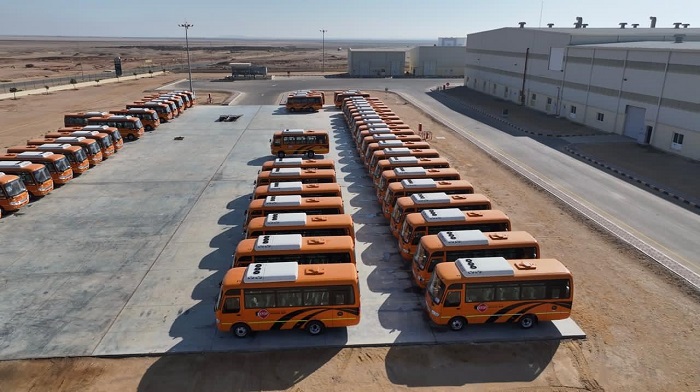
Muscat: Karwa Motors produced and supplied approximately 900 vehicles of various types to the local market in 2025, marking a significant step in strengthening the automotive industry in the Sultanate of Oman. The achievement supports national efforts to enhance local manufacturing, promote self-sufficiency in vehicles, and position Oman as a key hub for transportation solutions.
Dr. Ibrahim bin Ali Al-Balushi, Chief Executive Officer of Karwa Motors, said the company’s performance reflects its clear vision to establish a national automotive industry and achieve its strategic objectives, while meeting the growing needs of the local market across multiple vehicle segments.
He noted that school buses constituted the largest share of production, with 822 units manufactured under the national school bus replacement programme. These buses were built in compliance with the highest international safety and security standards and in accordance with approved national specifications, ensuring enhanced protection for students.
Dr. Al-Balushi added that the company also produced and supplied 100 buses for both government and private sector entities, offering integrated transportation solutions designed to support institutional operations and mass transit with high efficiency and long-term reliability. He stressed that these orders demonstrate strong confidence in Karwa Motors’ products.
In addition, the company supplied 30 specialised buses for the oil and gas sector, developed in line with the stringent safety standards approved by Petroleum Development Oman (PDO). These vehicles were designed to deliver optimal performance in demanding operational environments, reflecting institutional trust in the company’s solutions.
He emphasised that Karwa Motors’ production achievements highlight the growing efficiency of Oman’s automotive industry and underscore the company’s commitment to meeting local market demand through high-quality national products.
Looking ahead, Dr. Al-Balushi said Karwa Motors is advancing steadily by increasing local content and enhancing the competitiveness of the automotive sector, in line with the objectives of Oman Vision 2040. He noted that vehicle production represents a qualitative addition to the company’s strategy to supply mass-transport solutions for both domestic use and export markets.
On another front, Karwa Motors signed four cooperation agreements with local companies to establish an integrated national supply network encompassing industrial components, technical services, and logistics support.
The agreements aim to develop a comprehensive local supply ecosystem that increases in-country value, improves manufacturing efficiency, reduces dependence on imports, and enables Omani companies to participate in specialised industrial supply chains—thereby supporting sustainability and growth in the industrial sector.
The partnerships form part of Karwa Motors’ phased plan to expand local industrial content, localise knowledge, and transfer technical expertise, enhancing manufacturing sustainability and strengthening the competitiveness of national products in local and regional markets.
Dr. Ibrahim bin Hamad Al-Balushi affirmed that the agreements reflect the company’s commitment to boosting local manufacturing and increasing the proportion of locally sourced components. He highlighted that partnerships with national companies are essential to achieving industrial integration, supporting sectoral growth, and creating sustainable employment opportunities in line with Oman’s long-term industrial vision.
Meanwhile, Shahla bint Salem Al-Zadjali of the Procurement and Logistics Services Department at Karwa Motors explained that the agreements were signed following a comprehensive evaluation of local suppliers’ capabilities. She stressed the company’s focus on building long-term strategic partnerships with suppliers who meet quality and performance standards, strengthening supply-chain resilience, streamlining procurement processes, and increasing reliance on national products and services.