Muscat: As many as 493 food security projects were implemented during the 10th Five-Year Plan (2021–2025), to the tune of about OMR1.9 billion, according to related feasibility studies.
Dr. Ahmed bin Nasser Al Bakri, Undersecretary of the Ministry of Agriculture, Fisheries and Water Resources for Agriculture, said that the aforementioned projects included 399 in the agriculture sector, with investments worth OMR806 million.
He added that some of these projects already entered production stage and began lending support to the national economy and raising the sector’s contribution to the Gross Domestic Product (GDP).
Al Bakri pointed out that, during 2026—the first year of the 11th Five-Year Plan, the Ministry targets the implementation of 400 investment projects with an envisaged value of OMR400 million. The projects include 200 in the plant and livestock sectors, with investments of approximately OMR200 million, he added.
Al Bakri told Oman News Agency (ONA) that, so far, 219 investment opportunities have been offered through the “Tatweer” platform, and that this number stands for about 55 percent of overall target projects. He explained that these opportunities are available to investors in the fields of plants, livestock, fisheries and aquatic food security sectors.
“The second batch of projects (18 projects with investments estimated at aboutOMRtwo million) has also been launched, while steps are underway to complete the floating of all 400 investment opportunities through “Tatweer” platform before the end 2026,” he explained.
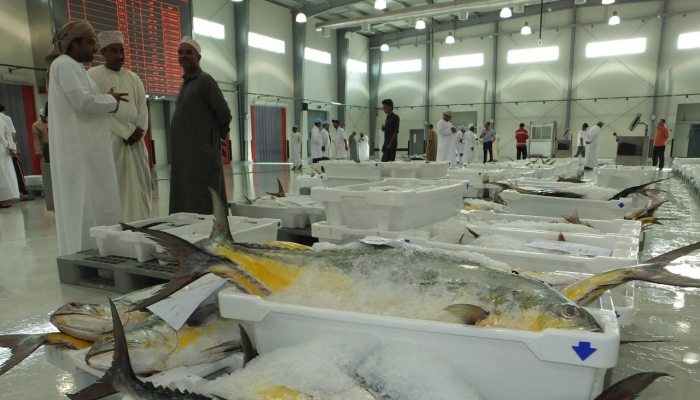
Speaking about self-sufficiency indicators, Al Bakri said that, until the end of 2025, data affirms the realisation of advanced rates: Self-sufficiency in fisheries reached 146 percent, with fish products being exported to about 60 countries, while self-sufficiency rate in dates reached 99 percent, with products being exported to 20 countries.
Self-sufficiency rate in vegetable crops reached 77 percent, said Al Bakri, noting that high-quality local products from this sector are exported to GCC states, Europe and Japan.
As for the livestock sector, self-sufficiency rate in table eggs stood at more than 95 percent, with an annual production of about 970 million eggs (with the output generated by 5 five commercial companies), said Al Bakri.
He added that efforts are being made to raise the rate of self-sufficiency in white meats, from its current level of about 62 percent, to more than 74 percent by the end of 2026. Al Safa Poultry Company now boasts an annual production rate of about 60,000 tonnes, he observed.
Al Bakri valued the ongoing partnership between Oman Investment Authority and JBS Company. He explained that current rate of self-sufficiency in red meats is about 45 percent, with steps underway to augment this rate through the implementation of quality projects, including an agreement signed with JBS Company (for Al Bashayer Red Meat Company).
This is in addition to projects for improving local breeds, enhancing supply chains, generating added value and raising re-exporting rates, he added.
Acting in cooperation with its partners, the Ministry of Agriculture, Fisheries and Water Resources is embarked on enhancing food security in Sultanate of Oman.