Sunday 17 / May / 2026
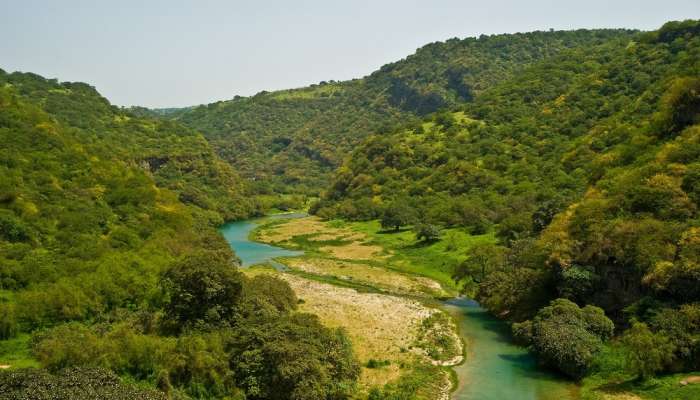
Muscat: The Sultanate of Oman is witnessing a gradual improvement in vegetation cover density and an expansion of green areas, alongside the stabilisation and sustainability of natural habitats, the return of some wild species to affected areas, higher survival and sustainability rates of planted trees, improved air quality indicators, reduced desertification and soil erosion, increased efficiency of coastal ecosystems – particularly in mangrove sites – and enhanced biodiversity indicators across natural environments.
The Environment Authority relies on scientific and environmental indicators to measure the health and stability of the ecosystem, said Dr. Mohammed bin Rashid Al Maamari, Director of the Cultivation and Nurseries Department. Vegetation cover is improving in several locations as a result of cultivation and environmental rehabilitation programmes, though some areas still face challenges such as overgrazing, urban expansion, water scarcity and climate change.
The Environment Authority is strengthening long‑term sustainability and protection programmes, using remote sensing, satellite imagery, field surveys and geographic information systems to monitor vegetation cover, track environmental changes and measure success and sustainability rates across afforestation sites, Al Maamari told Oman News Agency (ONA).
Relevant departments continuously review and update national plans to combat desertification in line with environmental and climate developments and Oman’s international obligations, particularly the UN Convention to Combat Desertification, he said.
Al Maamari pointed out that the National Plan to Combat Desertification (2018‑2030) focuses on protecting natural vegetation cover, restoring degraded areas, expanding afforestation and native tree planting, improving sustainable management of pastures and natural resources, raising water‑use efficiency, strengthening environmental monitoring with modern technologies, engaging the community and private sector and supporting nature‑based solutions to climate change. These directions are being aligned with the “Plant Oman 2050” project, part of an integrated national vision for environmental sustainability, food security and climate action.
He said that the national initiative to plant 10 million trees has shown important positive indicators since its 2020 launch through the end of 2025. More than 59 million seeds of wild trees have been sown, over 856,000 wild trees planted, more than 652,000 trees distributed, and over 11.3 million mangrove trees cultivated. Sustainability rates have reached 76 percent for mangroves, 60 percent for cultivated wild trees and 86 percent for distributed trees.
The initiative has also enhanced the efficiency of coastal ecosystems, boosted blue carbon stocks, expanded community participation, raised environmental awareness and supported Oman’s commitment to achieving carbon neutrality by 2050. The outcomes serve as a crucial launchpad for the next phase of the “Plant Oman 2050” project, he said.
Al Maamari added that among the national projects and initiatives implemented by the Environment Authority that have strengthened vegetation cover, improved ecosystem efficiency, raised environmental awareness and community participation, and aimed to reduce desertification and restore ecosystems are the six‑year national initiative to plant 10 million trees, mangrove cultivation projects in coastal governorates, native wild tree seed‑sowing programmes, green barriers to protect cultivation sites, rehabilitation of environmentally degraded areas, community and student afforestation campaigns, wild tree distribution programmes for individuals and institutions, projects using modern technologies for environmental monitoring and cultivation, and the preparation of the “Plant Oman 2050” project.
He explained that mangrove and wild tree cultivation programmes have improved the natural environment for many wild species, enhanced habitats for birds and marine life, increased the efficiency of natural ecological chains, and expanded areas capable of supporting native species. Adopting native species suited to Oman’s environment has strengthened prospects for long‑term ecological sustainability. The initiative has also supported ecological balance and helped mitigate the effects of climate change and desertification.
On key studies and field surveys assessing tree vegetation cover, Al Maamari added that the authority has carried out a number of studies and field surveys in collaboration with research institutions and universities. These have focused on assessing natural vegetation cover, studying degraded sites and setting rehabilitation priorities, evaluating success and sustainability rates of cultivated trees, studying natural habitats and biodiversity, assessing mangrove cultivation sites and measuring afforestation’s impact on soil stabilisation and local environmental improvement.
He affirmed that the results have shown that cultivation and environmental rehabilitation programmes have improved vegetation cover in several governorates, particularly in mangrove areas. The studies confirmed the importance of selecting native species suited to Oman’s environment and using appropriate irrigation techniques to ensure sustainability. They also demonstrated that nature‑based solutions are among the most effective options for combating desertification and climate change in Oman.
The “Plant Oman 2050” project is a strategic national initiative aimed at enhancing environmental sustainability, food security and climate action in the Sultanate of Oman, Al Maamari said. The initiative will be implemented through integrated phases, including identifying suitable cultivation sites, preparing environmental and technical studies, developing nurseries and propagation centres, engaging the private sector and local communities, using modern technologies and remote sensing, and setting up monitoring, follow‑up and sustainability programmes.
He added that the project covers several key areas: ecosystem and sustainable afforestation, food security and productive tree planting, coastal system sustainability (mangrove forests), enablers and natural resources (land, water, soil), green financing and investment and sustainable governorates and cities.
He affirmed that the project targets planting 100 million mangrove trees, expanding fruit trees to support food security, cultivating native wild trees, developing green belts, Omani forests and national parks, and supporting green cities and nature‑based solutions. Over the next five to ten years, it is expected to significantly increase green areas, enhance the carbon sequestration capacity of ecosystems, raise the contribution of natural solutions to combating climate change, provide investment opportunities and green jobs, support food security and environmental sustainability and strengthen Oman’s regional standing in environmental and climate initiatives.
“What has been achieved so far reflects the scale of national efforts and the integration between government institutions, the private sector and society,” said the Director of the Cultivation and Nurseries Department at the Environment Authority. “We view the ‘Plant Oman’ initiative as a long‑term national project aimed at building a more sustainable and higher‑quality environment for future generations, in line with Oman Vision 2040 and carbon neutrality by 2050.”