Saturday 05 / September / 2026
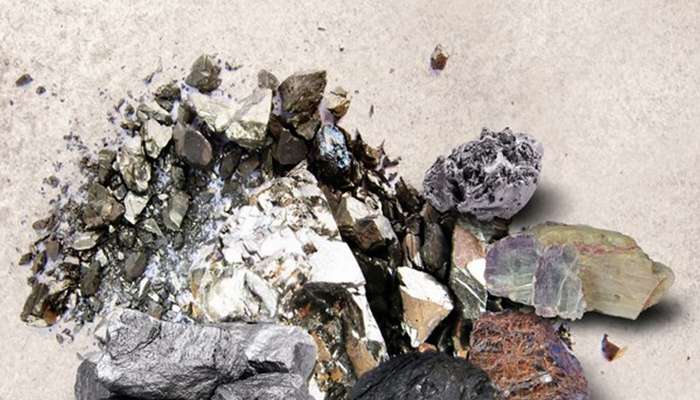
Critical minerals have emerged as essential drivers of modern economic growth, underpinning the green-energy transition and enabling advances in technology. Their importance to global manufacturing and the development of clean-energy infrastructure makes securing reliable supplies indispensable to countries pursuing net-zero goals. As demand for semiconductors, smartphones, computers and other advanced electronics continues to rise, so too does demand for rare earth elements.
Recognising their strategic importance, India has incorporated critical minerals into its broader development and national-security agenda through the National Critical Mineral Mission. The initiative is intended not only to support the country’s green transition by securing inputs for solar photovoltaic systems, wind-turbine permanent magnets and electric-vehicle batteries, but also to strengthen national security. Rare earths and other critical minerals are essential for advanced defence technologies, including radar and sonar systems, precision-guidance equipment and next-generation propulsion technologies.
Alongside expanding domestic exploration and mining, India is pursuing partnerships abroad to diversify its sources of supply. Securing critical minerals is increasingly viewed as a means of strengthening supply-chain resilience, reducing exposure to external shocks and limiting excessive dependence on China, which dominates several stages of the global rare-earth processing ecosystem.
It is against this backdrop that India has turned greater attention towards the mineral-rich areas of northern Myanmar.
Myanmar’s rare-earth production has expanded dramatically, making the country one of the world's largest producers. Its deposits have therefore acquired growing strategic importance for India as Beijing has tightened controls on the export of critical minerals and related technologies. Yet accessing Myanmar’s resources is far from straightforward. India must navigate a complex mix of geopolitics, conflict, difficult terrain, inadequate infrastructure and environmental concerns, while also confronting China’s entrenched position in mineral processing.
Bilateral cooperation in the mining and minerals sector has gained momentum since 2024. In June 2026, India and Myanmar discussed measures to deepen cooperation in critical and rare minerals alongside trade, security and connectivity. Building on longstanding historical, cultural and people-to-people ties, Prime Minister Narendra Modi and Myanmar's leadership held high-level discussions in New Delhi.
The momentum continued in July, when India's ambassador to Myanmar highlighted the increasing attention being given by the leadership of both countries to cooperation in rare earths and critical minerals. The renewed focus could provide a foundation for expanding collaboration in the mining and minerals sector through technical exchanges, business partnerships and capacity-building initiatives.
Yet considerable obstacles remain.
One of the biggest challenges is logistics. Many of Myanmar's rare-earth deposits are located in remote, rugged and conflict-affected areas of the north, close to the India-Myanmar frontier. Transporting raw materials from these regions requires infrastructure that remains limited, while instability along the border complicates commercial operations.
The political and security environment presents an additional challenge. Some mineral-rich areas are controlled or influenced by ethnic armed organisations, including the Kachin Independence Army. This creates friction with Myanmar's military authorities and places India in a delicate diplomatic position as it seeks to expand economic cooperation without becoming entangled in Myanmar's internal conflicts.
For New Delhi, the challenge is therefore not simply securing access to mineral deposits. It is developing a reliable and commercially viable supply chain that connects extraction to transportation, processing and eventual industrial use.
The way forward will require sustained engagement with Myanmar's authorities, alongside greater commercial, logistical and technical cooperation. Indian companies and government agencies will need to work with their Myanmar counterparts to develop mechanisms for exploration, extraction, transportation and processing while adapting policy to Myanmar's evolving political and security landscape.
India's strategy represents an important effort to de-risk its critical-mineral supply chains. Dependence on a single dominant supplier creates vulnerabilities, particularly when minerals are increasingly becoming instruments of geopolitical leverage. Diversifying supply is therefore not merely an economic objective; it is becoming a strategic necessity.
Myanmar offers India an important opportunity in this regard. But it is also a high-risk proposition. Access to the deposits is complicated by conflict, infrastructure gaps, environmental concerns and the wider geopolitical contest surrounding critical minerals.
India's Myanmar strategy is consequently a high-risk, high-reward gamble. Success could give New Delhi a valuable alternative source of rare earths, strengthen its domestic manufacturing ambitions and reduce vulnerabilities in critical supply chains. Failure, however, could leave India exposed to significant commercial, logistical and diplomatic risks.
For now, India's approach reflects a broader strategic imperative: as critical minerals become central to the global energy and technology transition, securing them is no longer simply a matter of resource procurement. It is increasingly a question of economic resilience, technological capability and national security.