Saturday 20 / June / 2026
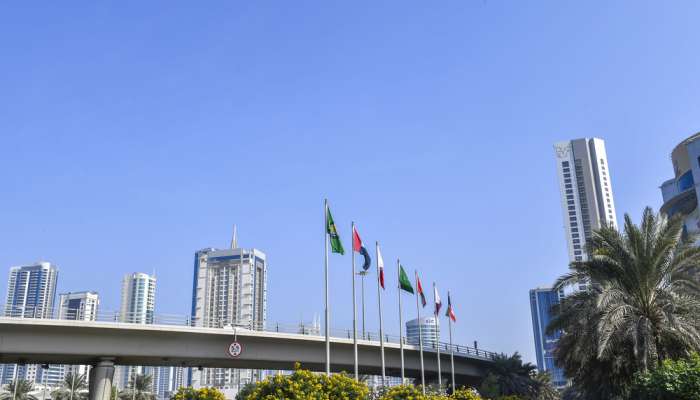
Muscat: The convening of the forty-sixth Gulf Cooperation Council (GCC) Summit, to be held this Wednesday in the Bahraini capital of Manama, embodies the collective aspirations of the member states' citizens for deeper cooperation, comprehensive integration, and strengthened bonds across all levels. His Majesty Sultan Haitham bin Tarik will lead the delegation of the Sultanate of Oman participating in this pivotal gathering, alongside Their Majesties and Highnesses the esteemed leaders of the GCC member states.
The summit deliberations are anticipated to encompass a thorough review of the joint Gulf cooperative journey across all political, economic, and security domains. This review will be guided by the directives of Their Majesties and Highnesses the Council's leaders. The agenda will also facilitate a strategic exchange of perspectives on current international and regional developments and their implications for regional security and stability. Furthermore, discussions will focus on the concerted endeavours of the GCC member states to propel initiatives aimed at establishing comprehensive peace in the region and forging unified stances in response to evolving regional dynamics.
Jassem Mohammed Al Budaiwi, GCC Secretary-General, underscored the imperative to reinforce the various pillars of Gulf, regional, and international collaboration. He expressed his profound hope that the Bahrain Summit will yield constructive resolutions and recommendations, thereby contributing a new cornerstone to the illustrious edifice of the Council's blessed march. He affirmed that the substantive breadth and depth of these agenda items vividly reflect the Council's considerable regional and international stature. They also cement the reality that the achievements secured by the member states on the path to Gulf integration—a paramount objective of Their Majesties and Highnesses the Council's leaders—are advancing resolutely in the correct direction, fully aligned with the Gulf peoples' aspirations and ambitions for greater unity and shared prosperity.
The forty-fifth Gulf Summit, hosted by the State of Kuwait in December 2024, achieved consensus on several key fronts. These included expanding the adoption of clean energy, boosting the investments of Gulf sovereign wealth funds in technology sectors and the green transition, and reaffirming support for the trajectory of economic integration and the advancement of joint action in the fields of energy, food security, and climate. The summit also saw the adoption of unified positions regarding emerging issues, the endorsement of several joint economic initiatives, and the approval of an executive plan for the GCC states' economic vision initiatives. This plan includes linkages to strategic transportation projects, electrical interconnection grids, and artificial intelligence, while reiterating a commitment to financial stability and the development of harmonized policies to attract foreign investment.
The GCC economies demonstrated balanced and resilient performance throughout 2024. The aggregate real Gross Domestic Product growth rate reached approximately 1.9 percent, primarily propelled by robust growth in non-oil sectors, which expanded by 4.4 percent. Economic projections indicate a gradual acceleration in real growth across the GCC, forecast to reach 2.8 percent in 2025, 3.7 percent in 2026, and ascend to 4.3 percent by 2027. This positive trajectory is underpinned by expanding investments in pivotal sectors such as tourism, renewable energy, manufacturing industries, and advanced technology.
Data from the GCC Statistical Centre revealed that foreign direct investment (FDI) inflows to the member states amounted to approximately US 523.4 billion in the year 2023. This substantial figure serves as a resounding affirmation of the escalating confidence of the international community in the Gulf's business and investment landscape.
The detailed statistics further illustrate that FDI flows into the GCC states constituted roughly 5 percent of total global flows during 2023. Concurrently, the volume of intra-Gulf investments has demonstrated significant growth, ascending from US 88.2 billion in 2015 to US 130.3 billion in 2023—a sum equivalent to 20 percent of the total foreign investment stock within the region.
The external merchandise trade of the GCC bloc registered a modest growth of 1.1 percent throughout 2024. This resilience is noteworthy given the backdrop of declining average oil prices, which fell from US 82.5 per barrel in 2023 to US 80.5 per barrel in 2024.
Non-oil exports from the member states achieved a marked and commendable increase, a clear testament to the tangible progress being made in diversifying the economic and export base. Re-export activities also enjoyed sustained growth, bolstered by the region's advanced and sophisticated logistical hubs.
Aggregate public revenues for the GCC nations reached approximately US 670.2 billion in 2024, representing an annual increase of 2 percent. Public expenditure was recorded at US 659.3 billion. This fiscal performance underscores the prudent commitment of Gulf governments to advancing public financial discipline and strategically channelling expenditure towards vital national development, infrastructure enhancement, and social welfare programs.
The data also highlighted a growing contribution of non-oil revenues to the total public income. This positive trend is attributed to the implementation of indirect taxation frameworks, such as value-added tax (VAT) and selective taxes, coupled with enhanced fiscal collection efficiency achieved through digital transformation in public financial management.
Gulf financial markets showcased robust and positive performance indicators in 2024. The aggregate market capitalization of the region's exchanges ascended to approximately US 4.2 trillion. This strong showing persisted despite a climate of global market uncertainty, largely driven by monetary policy tightening in the United States. The performance was underpinned by improved corporate profitability, moderated inflation levels, and the steady influx of institutional investment into key economic sectors.
The GCC summits stand as the paramount forum for crafting cooperative policies and strategic frameworks among the member states across the critical domains of security, economy, defense, and sustainable development. These gatherings embody the enduring spirit of solidarity and integration that has been the foundation of the Cooperation Council for over four decades.
In a special interview with Oman News Agency (ONA), Sheikh Ahmed bin Hashel Al Maskari, Head of the Department for the Gulf Cooperation Council and Regional Neighborhood, affirmed that the Sultanate of Oman, under the sagacious leadership of His Majesty Sultan Haitham bin Tarik, reiterates its unwavering commitment to bolstering the march of the Gulf Cooperation Council and strengthening the frameworks for collective action among its sisterly nations. He emphasized that the Council's cohesion and the unity of perspectives on shared regional concerns constitute indispensable pillars for safeguarding security and stability and propelling comprehensive development trajectories across the member states.
This principled Omani stance, he noted, is consistently manifested through active and constructive participation in all GCC summits, ministerial meetings, and specialized committees. This engagement springs from the Sultanate of Oman's profound conviction in the imperative of deepening integration across all political, economic, social, and developmental spheres—a commitment that amplifies the Council's collective capacity to navigate regional challenges and forge a more prosperous future for its peoples.
He further indicated that Oman Vision 2040 is strategically aligned with the overarching visions of fellow GCC states, all of which prioritize citizen welfare and quality of life at the heart of their joint endeavours. The Sultanate of Oman places particular emphasis on collaborative projects in trade, services, connectivity, and infrastructure, recognizing these as fundamental components of the Gulf economic integration journey. It is anticipated that these pivotal subjects will command prioritized attention in the deliberations of the leadership and specialized ministerial committees, thereby fulfilling the objectives of the common Gulf market and reinforcing all concerted efforts to advance economic and investment cooperation.
The forthcoming summit is anticipated to concentrate decisively on advancing the agenda of economic integration and fortifying shared developmental frameworks, alongside the coordination of political positions regarding regional and international developments. The Sultanate of Oman approaches these pivotal matters from a foundational principle dedicated to consolidating the unity and solidity of the Gulf front. It underscores the paramount importance of adopting dialogue, diplomacy, and mediation rooted in positive neutrality as the principal methodology for addressing regional issues and securing enduring peace and stability. The Sultanate of Oman further posits that sustainable economic cooperation necessitates the cultivation of broader strategic partnerships and a more profound diversification of income sources.
Sheikh Al Maskari clarified that the Sultanate of Oman stands firmly in support of all endeavours aimed at deepening economic integration among the Council's member states. Oman accords supreme priority to the development, expansion, and enhancement of the GCC electrical grid interconnection project. This commitment is paralleled by robust support for cooperative ventures in both conventional and renewable energy sectors, including green hydrogen initiatives, all of which serve to strengthen energy supply security and market stability.
On the commercial front, the Sultanate of Oman endorses any measure that contributes to amplifying the volume of intra-Gulf trade and investment, reducing customs tariffs, and improving the overall business climate. This support is strategically aligned with a focus on empowering the private sector and bolstering non-oil economic sectors, in full consonance with the strategic directives of Oman Vision 2040. Within the Council's institutional framework, Oman works diligently to extend bridges of cooperation with parallel economic blocs and influential global economic actors.
The Sultanate of Oman monitors regional developments through a principled approach that advocates for de-escalation and champions dialogue as the indispensable pathway for resolving regional disputes. It maintains a firm conviction that its steadfast policy of moderation, positive neutrality, and mediation actively contributes to the enhancement of regional security and stability. Oman perceives that the complex challenges encircling the region mandate exceptionally close coordination among Council members to safeguard their collective interests, ensure the security of vital maritime passages, and uphold the tenets of international law. It is noteworthy that the unified positions of the Gulf Cooperation Council in regional and international fora represent a significant strategic asset. These positions amplify collective Arab action on the global stage and make a substantive contribution to the achievement of both regional and international security and stability.
The Council states are actively deliberating the initiative for a unified Gulf tourist visa, often referred to as the "Gulf Schengen." This visa is slated for implementation following the fulfilment of requisite technical and legal prerequisites. Once operational, it will permit travellers streamlined access to all member states with a single visa, a development poised to significantly stimulate tourism and economic circulation within the GCC bloc.
Addressing the critical importance of a unified Gulf stance in the face of global challenges and conflicts, Sheikh Al Maskari affirmed that coordination and consultation among Council members are both continuous and deeply institutionalized. The Sultanate of Oman holds the view that harmonizing Gulf positions has evolved from a strategic preference into an imperative necessity. This is particularly true in light of multifaceted global political and economic challenges, encompassing geopolitical crises, volatility in energy markets, and transformative shifts within the international order. There is no doubt that concerted coordination and consultation aimed at presenting a united front significantly augments the Council's collective bargaining power. It enables the alignment of economic, fiscal, and monetary policies, safeguards member states' interests in engagements with international powers, and plays a crucial role in protecting energy security and ensuring market stability.
He elaborated that the upcoming phase presents a tangible opportunity to substantially deepen cooperation across a spectrum of critical areas, including trade, energy, investment, advanced technologies, and future-oriented industries. The comprehensive national modernization visions pursued by the Council states—among them Oman Vision 2040—are actively creating a more attractive and conducive environment for joint investments. These visions prioritize the development of key sectors such as tourism, logistics, and technology-driven industries, with the overarching goal of reducing hydrocarbon dependence through systematic income source diversification.
Regarding strategic partnerships and cybersecurity, he stated that the competent Omani government bodies lend their full support to the ongoing steps designed to enhance collective cybersecurity capabilities among GCC states. This vital cooperation is centered on harmonizing policies, developing national and regional capacities, facilitating the timely exchange of threat intelligence, and ultimately constructing a cohesive and resilient Gulf cybersecurity architecture capable of effectively countering evolving threats.
He highlighted that the GCC electrical interconnection grid is now fully operational and has already yielded considerable economic and technical benefits. The Sultanate of Oman is committed to its further development and the expansion of its capacities. Concerning the landmark Gulf Railway project, implementation is advancing with determined and steady progress. This transformative initiative represents a qualitative leap forward in the Gulf integration journey, promising to significantly enhance the fluidity of goods trade and the ease of cross-border movement for citizens.
In conclusion, Sheikh Al Maskari, stated that the Council states are expected to concentrate their collective efforts on reaffirming Gulf unity, protecting regional security and stability, endorsing diplomatic solutions and peaceful conflict resolution, respecting state sovereignty, coordinating on energy security and global market stability, fostering balanced regional and international partnerships, and invigorating constructive dialogue with neighboring states. The imperative for coordination and cooperation across all domains commands attention at the highest levels, ensuring a unified and influential GCC position in international forums.
Dr. Youssef Abdulkarim Al Boujairi, Director General of Legal Affairs and Human Rights of Bahrain, remarked that the Kingdom of Bahrain has the honour of hosting the forty-sixth session of the GCC Supreme Council. This occasion follows nearly four decades of sustained joint Gulf action, a journey that has attained remarkable levels of solidarity and tangible achievement across the Council's diverse cycles.
He added, "We look to this year's Bahrain Summit to fulfill a portion of the lofty aspirations of Their Majesties and Highnesses, the leaders of the GCC states, and to correspondingly meet the hopes of the Gulf peoples for greater progress, welfare, and prosperity. We are presented with an extensive agenda encompassing social, economic, cultural, and investment files. This is in addition to examining several axes of the strategic relations that bind the Council states to nations across the globe, alongside the promising future trajectories these relations entail."
He indicated that the economic dimension remains a cornerstone for reinforcing Gulf interconnectedness and social cohesion, and for facilitating the seamless movement of people and goods—factors indispensable to the region's continued prosperity.
He pointed out that among the most salient items on the summit's agenda is the pivotal agreement for the Gulf Railway project, which will physically link all six member states. This monumental undertaking stands today as a crucial milestone in materializing the vision of the Council's leaders and the aspirations of its citizens. This long-held vision is now on the cusp of realization, with the agreement anticipated for formal signing during the proceedings of the forty-sixth summit.
He noted that the file pertaining to connectivity in civil aviation is of particular significance. The civil aviation authorities within the GCC have achieved substantial strides in enhancing air connectivity, thereby cementing the region's status as a vital global aviation hub. The establishment of the GCC Civil Aviation Organization marks a significant institutional advancement within the framework of joint Gulf action.
He clarified that the summit will also deliberate on numerous initiatives designed to strengthen linkages and foster greater communication and solidarity among member states. While certain challenges may arise in pursuit of these ambitious goals, the concrete accomplishments attained thus far offer resounding proof that the collective Gulf vision continues to advance steadily, day by day.
It is noted that a preparatory meeting of the GCC Foreign Ministers convened in Manama. During this meeting, the State of Kuwait formally transferred the presidency of the Ministerial Council to the Kingdom of Bahrain.