Wednesday 29 / July / 2026
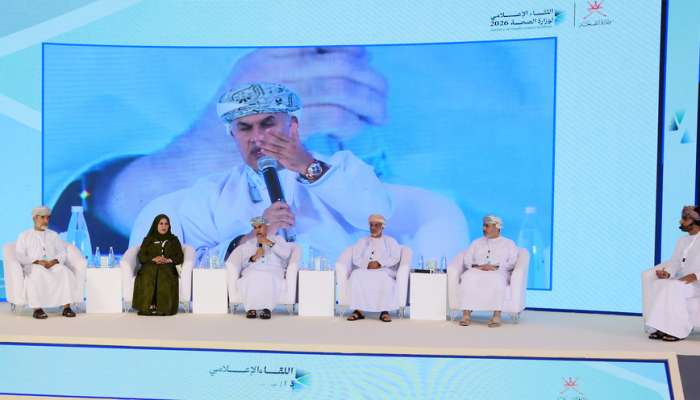
Muscat: Ministry of Health officials highlighted significant improvements in healthcare services, digital transformation, infrastructure expansion and medical localization during a media briefing held in Muscat, aligning achievements with the objectives of Oman Vision 2040.
Dr. Hilal Ali Al Sabti, Minister of Health, affirmed that the sector continues to strengthen an integrated healthcare system providing preventive, curative and rehabilitative services across all governorates.
Reducing Waiting Times and Expanding Specialized Care
Addressing hospital waiting lists, the Minister said the Ministry is expanding same-day surgeries and enhancing specialized operations at Royal Hospital and Khoula Hospital, while empowering governorate-level institutions to deliver specialized services under unified quality standards.
Health indicators showed notable improvements in 2025:
• Genetics clinic waiting times reduced from 8 weeks to 3 weeks (62%)
• Endocrinology from 6 weeks to 2 weeks (67%)
• Chemotherapy from 4 weeks to 10 days (60%)
• Emergency department waiting times reduced by up to 40%
The Ministry also performed six complex epilepsy surgeries in one week locally — procedures previously referred abroad — reflecting ongoing efforts to localize advanced medical services.
Historic Medical Achievements
Dr. Said Harib Al Lamki, Undersecretary of the Ministry of Health for Health Affairs, described 2025 as a pivotal year marked by the first successful heart transplant in Oman at the Royal Hospital, alongside:
• 38 kidney transplants
• 16 liver transplants
• 113 corneal transplants
• Introduction of neuromicrosurgery techniques
• First artificial cervical disc replacement
• Over 120 complex spinal surgeries in six months
The transplantation of the first artificial heart (HeartMate 3) and the separation of conjoined twins were also among landmark achievements.
Digital Transformation and Virtual Health Expansion
Healthcare digitalization accelerated significantly:
• Pharmacy waiting times reduced from 40 to 15 minutes via QR code system
• 45,000 virtual consultations conducted (target: 70,000)
• 65% of facilities connected to PACS/Shifa system (target: 90%)
• AI-based retinal screening examined over 25,000 diabetic patients
The National Center for Virtual Health introduced remote radiology and second medical opinion services in hematology and coagulation specialties.
The “Shifa” National Health Record app saw major upgrades, including 50% interface enhancement and 90% API improvements, with integration into private institutions.
Infrastructure and Equity in Healthcare
To improve equitable access, cardiac catheterization units were activated in Sohar, Nizwa and Sur. New hospitals opened in Suwaiq, Khasab and Al Mazunah, reducing emergency overcrowding by 30–40%.
More than 11 infrastructure projects were completed in 2025, including the Central Public Health Laboratory, while over 15 projects are underway for 2026–2027. Future plans include establishing national specialized centers such as:
• National Center for Women’s and Child Health in Sultan Haitham City
• National Center for Ophthalmology
• National Rehabilitation Center
• National Genome Program
• Al Seeb Referral Hospital
Health Indicators and Preventive Efforts
Results of the 2025 National Survey of Non-Communicable Diseases revealed:
• 93.1% of adults have at least one risk factor
• 64.7% overweight or obese
• 28.8% hypertension prevalence
• 13.4% diabetes prevalence
• 27.9% insufficient physical activity
Oman also received recognition from the World Health Organization for food products being free of trans fats.
Pharmaceutical Security and Localization
Drug evaluation periods were reduced from 180 to 90 days. Prices of 227 medicines were cut in 2025, bringing total reduced products since 2021 to 591, with average reductions of 27%.
Local pharmaceutical manufacturing expanded to 20 operational factories, with 18 more under construction. Purchases from national companies increased by 150%, generating savings of 27.4 million Omani riyals.
Budget and Workforce Growth
The Ministry’s 2026 budget reached approximately one billion Omani riyals. Unified medicine and medical supply tenders rose to 202 million riyals for 2025–2026.
The health workforce grew 17% from 37,732 employees in 2021 to 44,298 in 2025. Omanization reached 71.4%, particularly in nursing and medical support roles.
Governance and Quality Initiatives
The Ministry launched:
• “One-Stop Shop” service streamlining project
• Omani Accreditation System for healthcare quality
• “Aman” electronic adverse event reporting system
Nineteen hospitals and seven health centers gained international recognition as patient-safety institutions under WHO initiatives.
Officials affirmed that the Eleventh Five-Year Development Plan (2026–2030) will focus on institutional implementation, AI-driven predictive tools, infrastructure upgrades, service price unification studies, and expanded electronic integration via the Gov.om portal.
The Ministry emphasized that building national medical capacity, localizing advanced services, and strengthening governance remain central to achieving a flexible, sustainable and globally competitive health system under Oman Vision 2040.