Friday 04 / September / 2026
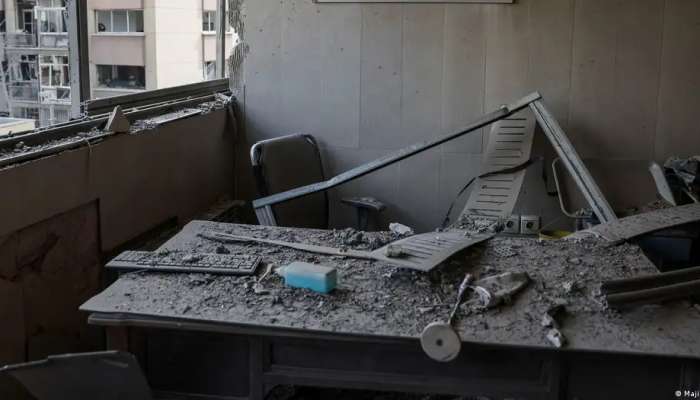
Tehran: The prolonged airstrikes against military and civilian targets in Iran are putting the country's fragile health care system under increasing pressure, according to multiple reports.
Iranian officials claim that many pharmaceutical factories and medical facilities have been hit since the US and Israel launched their bombing campaign in late February. Recently, the World Health Organization (WHO) also confirmed that the Tofigh Daru facility, which is used to make cancer treatment drugs, was among those damaged by strikes.
According to the WHO chief Tedros Adhanom Ghebreyesus, bombs also damaged the country's Pasteur Institute, a psychiatric hospital, and another hospital outside Tehran. The organization has verified over 20 attacks on the Iranian health care system with at least nine deaths, Tedros added.
Separately, over 100 US-based international law experts, including professors from Harvard, Yale and Stanford, decried airstrikes that "hit schools, health facilities, and homes" and cited reports by the Iranian Red Crescent, which puts the number of bombed health centers at 236 at around which reported 236 health centers had been bombed three weeks into the war.
Their letter described the US and Israel attack on Iran as a "clear violation of the United Nations Charter" and said the move raised "serious concerns about violations of international humanitarian law, including potential war crimes."
What did Israel and Iran say about Tofigh Daru?
Following the bombing of Tofigh Daru last week, Iran's Deputy Health Minister Mehdi Pirsalehi said the facility was targeted by a "direct missile strike."
"The plant was one of the leading manufacturers of active ingredients for hospital medications and surgical drugs," he said. "The strikes completely destroyed production lines, as well as the research and development departments."
Israel confirmed the attack but said Tofigh Daru used its status of a civilian company as a "cover" while "systematically supplying chemicals" to the Iranian regime. The Israeli military said the chemicals included highly addictive and dangerous anesthetic fentanyl.
"Tofigh Daru had knowingly and systematically supplied this deadly substance to [Iran's Organisation of Defensive Innovation and Research], which used it to conduct research and development on chemical weapons," the IDF said in an online post.
The accounts provided by the two opposing sides could not be independently verified. In international pharmaceutical registries, Tofigh Daru is listed as a manufacturer of pharmaceutical ingredients, including oncology medications and anesthetics.
Cancer patients in danger
DW spoke to two Iran-born doctors and activists about the strikes on Iranian health care and the consequences for chronically ill patients.
According to Vienna-based Dr. Hassan Nayeb-Hashem, who left Iran after the 1979 revolution, Tofigh Daru was producing a broad spectrum of essential medicine.
"The factory was responsible for a major part of the country's production and had successfully localized 50 strategic active ingredients. A massive amount of medicines has disappeared from the domestic supply chain due to the latest attacks," he told DW. "It is extremely difficult to procure this amount from abroad under the current circumstances."
Nayeb-Hashem warned that the supply chain delays could have immediate impact, especially on patients currently in therapy.
Cancer medicine is one of the most expensive therapies in Iran, with the costs roughly equivalent to one or two monthly salaries. Health insurers often refuse to pay for imported medication and many patients have only limited access to the drugs.
Both Nayeb-Hashem and his colleague Hamid Hemmatpour told DW that targeted destruction of medical and pharmaceutical facilities constitutes a war crime under the Geneva Conventions and the rules of the UN's WHO.
These special protections can be removed in individual cases only, if the facility is used for military purposes.
'The emergency is dire'
Hemmatpour, who is also based in Vienna, warns that destruction of Iran's pharmaceutical industry could be "the death blow" for its health care system.
"In times of war, it is nearly impossible to import medicines from countries like India," he told DW.
He points to a story of a cancer patient in Tehran, who tried to obtain medication through Iran's Mahak Charity.
"They told him that even the simplest pain killers or anti-dizziness medication [for chemotherapy patients] were no longer available. The emergency is dire."
War drives doctors out of Iran
Hemmatpour also pointed out another crisis — the lack of doctors.
"In addition to the physical destruction, many experienced doctors and surgeons are no longer available or cannot return to Iran due to security reasons," he said.
The beginning of war saw many doctors with dual nationalities leave Iran by crossing the border with Armenia or Turkey, even though Iranian officials managed to prevent other medical experts from leaving the country. Many private doctors' offices are now closed in Tehran.
The outcome is a massive overload on the remaining doctors. In some parts of Tehran, a single doctor is treating 200 to 300 patients every day, said Hemmatpour.
And the situation is "much worse" outside the capital city, the doctor added.
"We had a case of a patient who was injured during the nationwide protests (in January) and needed several highly specialised surgeries. He was moved around between four cities, but ultimately lost his leg. Most specialists are located in major cities like Tehran, Mashhad, Shiraz, or Isfahan — other cities are severely understaffed."
Veteran doctor and activist Nayeb-Hashem warned that the consequences of the war are likely to stretch into the future.
"The real tragedy is — even if the war ends today, the Iranian government would likely rebuild military facilities first — and not the health care and safety of the people."