Wednesday 22 / April / 2026
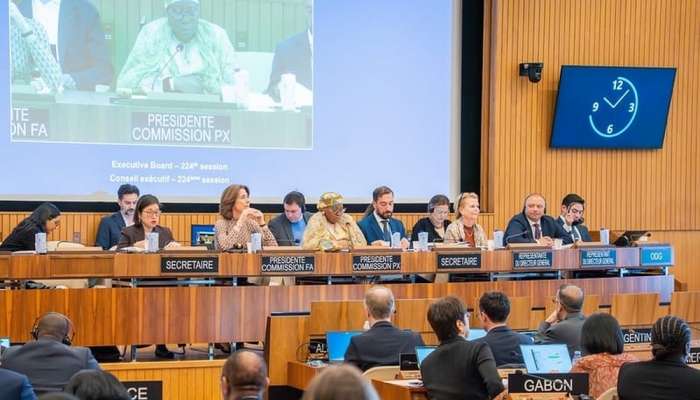
Paris: The United Nations Educational, Scientific and Cultural Organization (UNESCO) has approved the establishment of the UNESCO-Sultan Haitham Prize for the Safeguarding of Intangible Cultural Heritage, a move that reflects international recognition of Oman’s pioneering role in protecting intangible cultural heritage and elevating it as a shared human foundation.
The prize is the result of a joint initiative led by the Ministry of Culture, Sports and Youth, in collaboration with the Ministry of Education and the Oman National Commission for Education, Culture and Science, and in coordination with Oman’s Permanent Delegation to UNESCO. Its conceptual framework and objectives have been designed to align with international approaches to protecting intangible cultural heritage.
Oman was among the first countries to ratify the 2003 Convention for the Safeguarding of Intangible Cultural Heritage, through Royal Decree No. 56/2005 issued on 22 June 2005. The Ministry of Culture, Sports and Youth plays a central role in implementing the convention by registering intangible cultural heritage elements on UNESCO’s three lists: the Representative List of the Intangible Cultural Heritage of Humanity, the List in Need of Urgent Safeguarding and the Register of Good Safeguarding Practices.
The prize is a natural extension of His Majesty Sultan Haitham bin Tarik’s deep commitment to the cultural sector. His Majesty took charge of the Ministry of Heritage and Culture in 2002, a period that saw significant progress in cultural development, culminating in Oman’s accession to key UNESCO conventions, most notably the 2003 Convention for the Safeguarding of Intangible Cultural Heritage.
Among the distinguished cultural achievements realized in the Sultanate of Oman—in which His Majesty Sultan Haitham bin Tarik has played a pivotal role and to which he has contributed significantly to the flourishing of the cultural movement within the country—are the establishment of the National Museum, the Oman Across Ages Museum, the National Archives (the National Records and Archives Authority), and the Sayyid Tarik bin Taimur Cultural Complex (currently under construction), in addition to the cultural centers and libraries dispersed throughout various parts of the Sultanate of Oman and beyond.
The prize is expected to become a leading global initiative honouring outstanding contributions in the field of intangible cultural heritage. It aims to recognise individuals, institutions, organisations, centres, academic and cultural institutes, and governmental and non-governmental bodies that contribute to the safeguarding, preservation, documentation and sustainability of cultural heritage.
The prize seeks to realize a range of objectives that intersect with international cultural endeavors, most notably: rewarding the efforts of organizations that have contributed to the safeguarding and transmission of intangible cultural heritage—recognized by communities, groups, and in some cases individuals as an integral part of their heritage—in accordance with Article 2 of the 2003 Convention for the Safeguarding of the Intangible Cultural Heritage.
Furthermore, the prize aims to protect intangible cultural heritage and amplify its role in fostering social cohesion, peace, equality and sustainable development, while also ensuring respect for the intangible cultural heritage of the communities, groups, and individuals concerned. Additionally, it strives to elevate awareness at the local, national and international levels of the importance of intangible cultural heritage and to guarantee its mutual appreciation.
Among its further objectives is the effective implementation of the 2003 Convention through its alignment with initiatives endorsed by the Convention’s governing bodies, including the UNESCO online platform for the exchange of expertise in the safeguarding of intangible cultural heritage. The prize also seeks to contribute to the realization of UNESCO’s 2030 Sustainable Development Goals, specifically: Quality Education, Sustainable Cities and Communities and Peace, Justice and Strong Institutions.
Sayyid Saud bin Hilal Al Busaidi, Minister of Culture, Sports and Youth, affirmed that the establishment of the UNESCO-Sultan Haitham Prize for the Safeguarding of Intangible Cultural Heritage embodies international recognition of the role undertaken by the Sultanate of Oman in supporting global efforts to preserve intangible cultural heritage, while further elevating its presence within the priorities of international cultural action.
He explained that the prize constitutes a qualitative enhancement to the cultural framework of UNESCO, contributing to the elevation of intangible cultural heritage as a cornerstone of human identity and a bridge for fostering rapprochement among peoples, in addition to supporting pioneering initiatives and strengthening community engagement in the preservation of this shared human legacy.
He noted that the prize aligns seamlessly with the Sustainable Development Goals by promoting social cohesion and reinforcing the principles of mutual understanding and respect, reaffirming the Sultanate of Oman's steadfast commitment to sustaining international efforts and enhancing collaboration with Member States and UNESCO in this vital domain.
He further emphasized that this prize is a testament to the pride inspired by the Royal support and patronage that intangible cultural heritage enjoys both nationally and internationally under the leadership of His Majesty Sultan Haitham bin Tarik.
The prize will further contribute to advancing scientific research and innovation in the fields of cultural heritage, while also reinforcing the educational and pedagogical dimensions intrinsically linked to it, thereby consolidating the intergenerational transmission of knowledge and expertise, enriching cultural dialogue among peoples, and affirming the enduring values of tolerance and human understanding.
The prize will encompass the full spectrum of intangible cultural heritage as classified by UNESCO, namely: oral traditions and forms of expression, performing arts, social practices and festive occasions, as well as knowledge and practices concerning nature and the universe, in addition to skills associated with traditional craftsmanship.
Eligibility for the prize requires that nominated entities—including institutions, community centers, non-governmental organizations, cultural associations, and other community-based bodies—have made significant contributions to the safeguarding, transmission, or promotion of intangible cultural heritage. The general and technical conditions governing the prize, together with its thematic axes, shall be developed by UNESCO in coordination and agreement with the Ministry of Culture, Sports and Youth.




