Saturday 02 / May / 2026
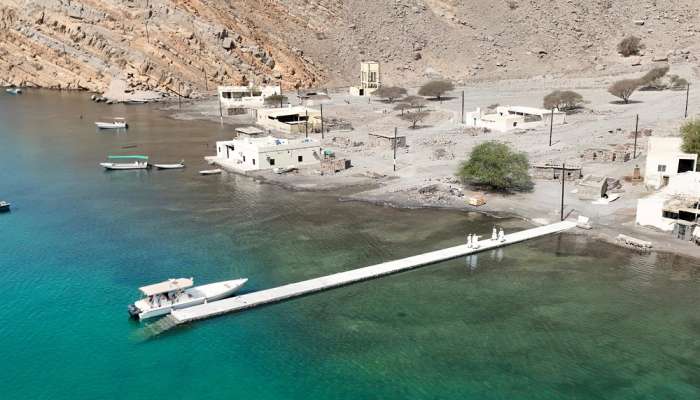
Khasab: The Ministry of Agriculture, Fisheries and Water Resources has recorded significant progress in a range of development projects across Musandam Governorate, reinforcing efforts to enhance food security, promote environmental sustainability, and expand income-generating opportunities.
Dr. Ali bin Abdullah Al-Alawi, Director General of Agricultural, Fisheries and Water Resources in Musandam Governorate, said that several key infrastructure projects have reached advanced stages of completion, particularly in the fisheries sector, which is considered a cornerstone of the governorate’s economic development.
He noted that fish market projects in Khasab, Ghamdha, and Al-Jari ports have reached 99 percent completion, while the fishing port project in Dibba is 98 percent complete. Rehabilitation works at Bukha and Lima ports have been fully completed, while Kumzar port rehabilitation has reached 60 percent.
He added that the Dibba fishing port development and expansion project is among the most strategic initiatives, with marine works reaching 99 percent, building works 95 percent, infrastructure 50 percent, and utility networks 16 percent. The project, valued at more than OMR 39.8 million, is being implemented by a joint alliance between Al-Sarouj Construction Company and Doha Marine Works Company.
He also pointed out that the management and operation project of the Dibba fishing port is currently under bid evaluation through the Ministry of Housing and Urban Planning’s development platform. Once operational, the port is expected to significantly contribute to the national economy by creating direct and indirect employment opportunities, attracting investment, enhancing fish production, and strengthening food security.
According to Al-Alawi, the port will also improve coastal infrastructure and raise the efficiency of fishing, unloading, and marketing processes, particularly benefiting artisanal fishermen and boosting overall production in the governorate.
In the area of environmental and service projects, he said the national campaign to combat mesquite trees has reached 95 percent completion, while marine habitat rehabilitation projects in Khasab and Dibba have reached 81 percent. The ministry is also implementing national initiatives such as vaccination campaigns and integrated pest management programs targeting Dubas palm insects and red palm weevils.
On infrastructure and protection projects, he highlighted ongoing works including the construction of a surface dam in Hanna (approved supplementary funding), a dam in Lima (work order pending signing), and a protection wall in Al-Sharia Al-Aqaba in Dibba, where work has already begun. Additional projects in Madha related to wells and monitoring systems have reached completion rates between 85 and 100 percent.
In fisheries development, he said proposals are being reviewed for oyster farming in Khasab, alongside fish farming initiatives in Dibba and ongoing aquaculture projects in Khasab’s Al-Harf and Ghub Ali areas, including commercial trial harvesting activities. Further proposals for fish farming projects in Bukha are also under consideration.
He added that breakwater projects in Ghamdha and Al-Jari villages in Bukha have reached 99 percent completion, with only dredging and connection works remaining. These sites have also been offered for investment.
Al-Alawi stressed that these projects have already improved fishing operations, enhanced product quality, increased fishermen’s income, and created new employment opportunities, contributing directly to food security in the governorate.
He also outlined major investments in the fisheries sector, including finfish farming in Khasab worth OMR 10 million, a dry dock project in Dibba of similar value, and the management and operation of marine fishing ports, in addition to a fish freezing and packaging facility. He noted that the upcoming dry dock is expected to reduce maintenance costs for fishermen once completed.
To ensure sustainability of marine resources, he said the ministry follows strict regulatory measures, including fishing season controls, scientific research, infrastructure development, and support for fishermen, alongside promoting sustainable aquaculture practices and reducing waste.
He emphasized that environmental impact assessments, water quality monitoring, and the adoption of advanced aquaculture technologies are central to reducing the environmental footprint of open-water farming projects.
Fisheries research centres, he added, play a critical role in providing scientific data for planning and decision-making, while water resource projects such as dam maintenance help enhance groundwater recharge and protect against flooding.
Looking ahead, he said the ministry is planning to expand fish farming and food security projects further, while increasing private sector participation in fisheries investments, including the management of fish landing sites and other development opportunities in Musandam.