Monday 08 / June / 2026
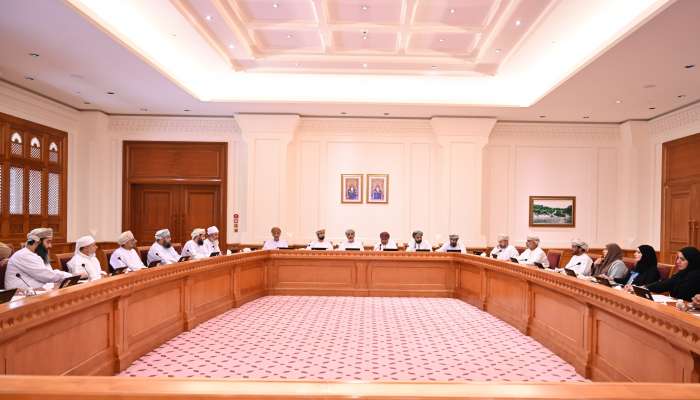
Muscat: The Media, Tourism and Culture Committee of the Shura Council met on Monday with representatives of community libraries and cultural centres as part of its study titled “Enhancing the Role of Community Cultural Centres and Libraries and Maximising Their Impact on Society.”
The proposal stems from the vital role these institutions play in fostering a knowledge-based and culturally aware society through the promotion of reading and the dissemination of culture as an integral component of a deeply rooted cultural lifestyle.
Ali Khalfan Al Hassani, Deputy Chairman of the Media, Tourism and Culture Committee, welcomed the representatives of community libraries and cultural centres, commending their significant efforts and highlighting the importance of cultural institutions in supporting intellectual and cultural development.
He affirmed the Committee’s commitment to engaging with a wide range of perspectives, experiences, and field-based insights related to the work of community libraries and cultural centres.
Such engagement, he noted, would contribute to developing a comprehensive understanding of the challenges facing these institutions and their developmental needs, ultimately leading to practical recommendations aimed at strengthening their presence and cultural impact while supporting the sustainability of their future programmes and activities.
During the meeting, representatives of the Oman Memory Centre delivered a presentation highlighting the Centre’s achievements and its role in preserving and documenting Omani heritage.
The presentation outlined the Centre’s integrated framework encompassing research, collection, recording, documentation, data preservation, cataloguing, restoration, heritage verification, academic studies, publishing, digital services, and the organisation of conferences and exhibitions.
The presentation also highlighted a number of indicators and statistics reflecting the Centre’s extensive cultural and knowledge-based activities, including the development of a digital repository containing tens of thousands of manuscripts, documents, and historical photographs.
It further noted the publication of numerous specialised books and catalogues, as well as the establishment of an electronic platform for cataloguing manuscripts, documents, and other knowledge resources, thereby facilitating access for researchers and interested individuals both within and outside Oman.
In addition, the presentation showcased the Centre’s efforts in digitising private collections and archives, preserving and restoring historical manuscripts and documents, and organising international scientific conferences, seminars, and cultural exhibitions.
These initiatives have contributed to highlighting Oman’s civilisational heritage and strengthening cultural and intellectual exchange with countries around the world, demonstrating the significant role that community cultural institutions can play in preserving national identity and promoting cultural awareness.
The Committee received views and proposals from representatives of community and private libraries and cultural centres.
Participants outlined a number of financial, operational, and technical challenges facing these institutions, most notably limited financial resources, rising operational and maintenance costs, the need to enhance digital and technological infrastructure, and the importance of developing specialised human resources capable of keeping pace with rapid developments in knowledge management and cultural content preservation.
Participants also discussed a range of proposals aimed at strengthening support for and ensuring the sustainability of community cultural institutions.
These included expanding partnerships with public and private sector entities, establishing sustainable funding programmes, and providing specialised training and capacity-building initiatives for professionals working in the cultural sector, thereby enhancing institutional performance and maximising cultural and societal impact.
The Committee further reviewed participants’ perspectives regarding public engagement with the activities, events, and services offered by community cultural centres and libraries, and their contribution to promoting knowledge, reading, and scientific research.
Discussions also addressed the current status of these institutions in terms of human and financial resources, service facilities, and the nature of the programmes and activities they deliver, in addition to examining existing forms of cooperation with relevant entities and opportunities for further development.
It is worth noting that the proposal aims to formulate a comprehensive vision that supports the empowerment of community cultural centres and libraries, strengthens their role as active cultural and knowledge institutions, and reinforces their contribution as key partners in preserving national identity, promoting cultural values, and building a knowledge-based society.
The meeting was chaired by Ali Khalfan Al Hassani, Deputy Chairman of the Media, Tourism and Culture Committee, and attended by members of the Committee.