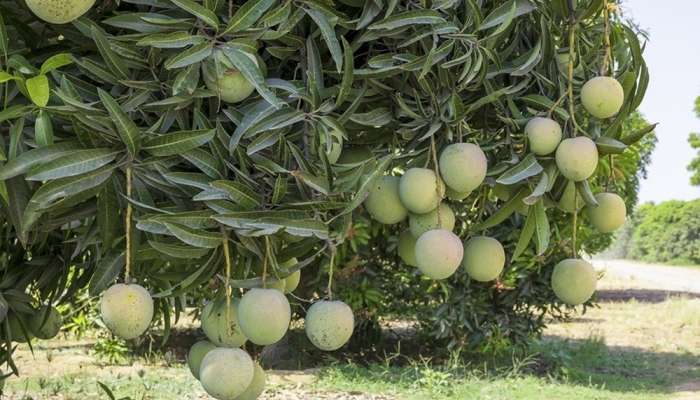
Sohar: The “OQ Green Initiative,” implemented by OQ Group in 2021 in partnership with the Ministry of Agriculture, Fisheries and Water Resources and the Agricultural and Fisheries Development Fund during the period (2022–2025), has achieved qualitative results that contributed to supporting food security and enhancing agricultural and environmental sustainability in the Sultanate of Oman.
More than 274,000 seedlings of fruit and wild trees were produced and distributed across various governorates of the Sultanate of Oman, contributing to expanding green areas, increasing local production, preserving natural resources, and supporting efforts to reduce carbon emissions.
Dr. Ali Ubaid Al Adawi, Director of the Department of Agricultural Research in North Al Batinah Governorate, confirmed that the initiative represents a successful national model of partnership between the public and private sectors.
He noted that it contributed to producing high-quality and highly productive seedlings of various economic varieties, including mango, Omani lemon, fig, grape, guava, pomegranate, banana, and Sidr, thereby supporting the development of the agricultural sector, raising production efficiency, and contributing to achieving food security targets.
He explained that the initiative aimed to support farmers, investors, commercial fields, government institutions, and civil associations.
More than 169,000 seedlings were distributed to commercial fields, and over 16,000 seedlings were given to farmers, alongside thousands of seedlings distributed to investors and government institutions, contributing to the expansion of fruit tree cultivation, enhancing agricultural production, and increasing the sector’s contribution to the national economy.
He pointed out that the initiative also supported scientific research and agricultural development efforts by expanding genetic banks for fruit crops, developing laboratory and diagnostic tests, and executing applied studies aimed at improving propagation and production techniques, raising the quality of seedlings, and preserving plant genetic resources.
He indicated that the expected economic return of the initiative exceeds 10,000 tonnes of fruit over the coming years, with a market value of more than OMR4.3 million, in addition to supporting farmers’ income and enhancing self-sufficiency levels.
Dr. Ali Ubaid Al Adawi added that the environmental impact of the initiative is represented in planting more than 274,000 trees, which are expected to absorb approximately 8,000 tonnes of carbon dioxide gas annually, alongside enhancing vegetation cover, limiting desertification, and supporting adaptation to the effects of climate change.
For his part, Said Nasser Al Badaai, Director General of Social Investment at OQ Group, confirmed that the “OQ Green Initiative” represents one of the group’s social investment initiatives, reflecting its commitment to supporting sustainability through national partnerships that contribute to achieving a tangible environmental, economic, and societal impact.
He added that the results of the initiative confirm the importance of cooperation between the public and private sectors in supporting environmental and agricultural projects, given their role in enhancing food security, protecting biodiversity, rationalizing the use of natural resources, and reducing carbon emissions, in line with the objectives of Oman Vision 2040 and national ambitions toward achieving carbon neutrality by 2050.
He pointed out that the impact achieved by the initiative in local communities, the agricultural sector, and the environment reflects OQ’s direction toward qualitative initiatives that contribute to supporting economic, social, and environmental development in the Sultanate of Oman.
The initiative also contributed to enhancing in-country value by awarding more than 60 operational and executive contracts to small and medium enterprises (SMEs) and individuals, with a total value exceeding OMR346,000, alongside providing thousands of working hours for citizens, reflecting its economic and social impact alongside its environmental impact.
The “OQ Green Initiative” continues to consolidate an integrated national model that supports agricultural development, enhances food security, and contributes to achieving a balance between economic growth and the preservation of natural resources.