Monday 17 / August / 2026
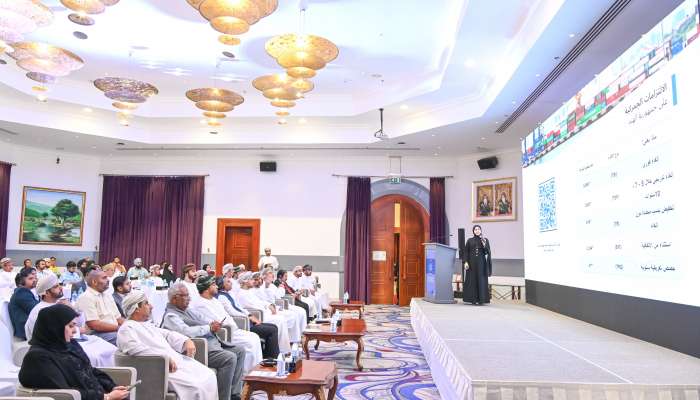
Salalah: An awareness workshop on the Comprehensive Economic Partnership Agreement (CEPA) between the Sultanate of Oman and the Republic of India, held on Monday in the Wilayat of Salalah, examined the opportunities available to the Omani private sector under the agreement, along with the requirements for market access to India, mechanisms for utilizing tariff reductions and exemptions, and rules of origin.
The workshop, organised by Oman Chamber of Commerce and Industry (OCCI), addressed the agreement’s components and advantages, related customs procedures, as well as export financing and insurance opportunities, and the challenges Omani enterprises may face when entering the Indian market, alongside strategies to overcome them.
Faisal Abdullah Al Rowas, Chairman of the Board of Directors of Oman Chamber of Commerce and Industry, affirmed that the Comprehensive Economic Partnership Agreement represents a new economic dimension in the trajectory of Omani-Indian relations, opening broader horizons for cooperation, growth, and investment.
This, he noted, will strengthen trade ties between the two nations and elevate them to deeper and more sustainable levels.
On his turn, Shri Prashant Pise, Ambassador of the Republic of India to the Sultanate of Oman, emphasized in a statement the importance of the Comprehensive Economic Partnership Agreement in advancing Omani-Indian relations.
He noted that the agreement reflects the shared commitment to elevate economic, trade, and investment cooperation to broader levels, thereby reinforcing mutual interests and opening new avenues for collaboration between the two countries.
The workshop featured a presentation titled “An Overview of Export Potential for Omani Products Under the Agreement,” which addressed key pathways for the Omani private sector to benefit from the agreement, emphasising the importance of studying the Indian market, understanding demand patterns, and identifying opportunities available for Omani products.
It also covered enhancing the competitiveness of local enterprises and leveraging trade and investment partnerships to expand the base of Omani exporters and open new markets for national products.
Another presentation during the workshop focused on the economic benefits of the agreement, highlighting that it enhances bilateral trade in goods. Oman’s commitments cover 98.08% of tariff lines, representing 99.38% of the value of Indian exports to Oman, while India’s commitments cover 77.79% of its tariff lines, representing 94.81% of the value of its imports from Oman.
The workshop also included a visual presentation by the Indian side on Indian customs procedures, import documentation, and facilitation measures under the agreement, along with an overview of the procedures and requirements that Omani companies need to be familiar with when entering the Indian market.
A panel discussion entitled “From Agreement to Market: Opportunities and Challenges for the Omani Private Sector in the Indian Market” was held as part of the workshop. It addressed promising sectors, export and investment opportunities, market access requirements, rules of origin, and customs procedures, in addition to challenges facing Omani enterprises and ways to enhance their readiness to leverage the agreement.
This workshop is part of the strategic direction of Oman Chamber of Commerce and Industry to improve the business environment, expand the economic diversification base, and empower the private sector to benefit from trade and economic agreements.
It also aligns with efforts to strengthen the private sector’s capacity to access foreign markets, support the diversification of Omani exports, and open new horizons for small and medium enterprises and Omani companies seeking to expand into international markets. -