Sunday 06 / September / 2026
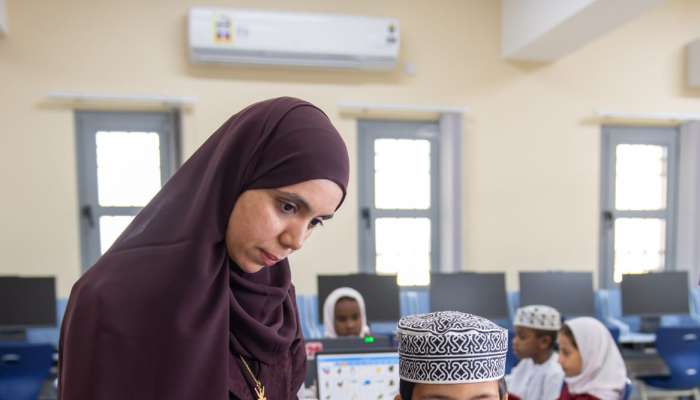
Muscat: The Ministry of Education officials said the new academic year will place greater emphasis on innovation, artificial intelligence, entrepreneurship, career guidance, scientific competitions and student leadership, in line with the objectives of Oman Vision 2040.
Infrastructure spending on educational institutions includes OMR15 million for additions at 40 schools, OMR7 million for renovations at about 147 schools, OMR9.5 million for comprehensive maintenance and OMR2.6 million to prepare and refurbish 52 science laboratories.
The ministry has also completed the replacement of 96,000 air-conditioning units in schools at a cost of OMR11 million.
The Ministry of Education has 68,205 educational, administrative and technical staff for the new academic year, including 21,011 male and 47,194 female teachers.
Education Minister Dr. Madiha bint Ahmed Al Shaibani said the ministry’s priorities include improving the quality of school and higher education, strengthening governance and aligning educational outcomes with labour market needs.
She highlighted the ongoing integration of the former education and higher education portfolios into a single Ministry of Education, describing the move as an important institutional transformation aimed at creating a more integrated educational system from pre-school through higher education.
The ministry will open 18 new school buildings this academic year to accommodate student growth, reduce double-shift schools, replace ageing facilities and expand laboratories and educational technologies.
The private education sector is also expanding, with the number of private schools expected to reach 1,366, up from 1,264 last year.
Vocational and technical education is being expanded to include engineering, industrial, travel and tourism, information technology and business administration. The programme, currently operating in four governorates, will expand to South Al Sharqiyah and South Al Batinah, bringing the total to six governorates.
The ministry has also introduced 11 new curricula and developed six others as part of the third phase of its curriculum modernisation programme. Chinese has been added as an optional subject for Grade 12 in participating schools, while the number of subjects for Grades 7 and 8 has been reduced from 11 to 10.
Digital transformation remains a major focus. The Noor educational platform has been implemented in all schools, while virtual science laboratories allow students in Grades 2 to 12 to conduct about 387 experiments. The ministry has also digitised academic records dating from 1970 to 2006 and equipped specialised artificial intelligence laboratories in educational directorates.
The ministry will begin implementing an artificial intelligence framework for school education during the new academic year, focusing on responsible use of AI, teacher training, digital literacy and pilot projects.
Higher education capacity is also increasing. The Unified Admission Centre offered 34,113 study places, an increase of about 17% from the previous academic year. The number of students receiving offers in the first admission round rose to 33,031, up nearly 20%.
The academic year will also see the opening of the new Oman College of Dentistry building, the University of Sharqiyah branch in Sur and the University College of Duqm.
To strengthen the teaching workforce, the ministry completed the appointment of 3,980 teachers, including 1,211 men and 2,769 women. It also received 8,048 requests for external transfers from Omani teaching and related staff, with 2,796 transfers approved.
The ministry is also preparing the fifth edition of the Oman Science Festival, while expanding programmes in mathematics, physics, chemistry, biology, robotics and artificial intelligence.
Officials stressed that closer cooperation between schools and families will remain essential, particularly in guiding students towards safe and responsible use of technology and social media, while encouraging learning, sports and cultural activities.
A total of 876,117 students began the 2026/2027 academic year across government schools in Oman, marking the start of a new phase of educational development focused on quality, digital transformation and future skills.
The student population includes 440,899 boys and 435,218 girls, enrolled across 1,298 government schools. About 3,903 students are enrolled in special education programmes in government and private schools.