Sunday 13 / September / 2026
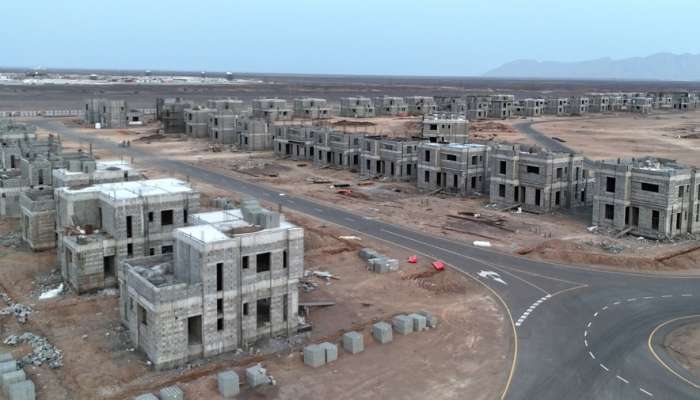
Ibra: The housing and urban planning sector in North Al Sharqiyah Governorate is witnessing sustained development activity this year, with projects focused on social housing, residential land allocation, integrated neighbourhoods and digital services to support family stability, organised urban growth and quality of life.
Ali bin Saeed Al-Rujibi, Director General of Housing and Urban Planning in North Al Sharqiyah Governorate, told Oman News Agency (ONA) that the sector’s indicators during the first half of 2026 included the creation of 580 plots of land for various uses, the provision of 455 residential plots and the approval of 628 plots under the “Plan Your Land” initiative.
He said the figures reflect ongoing efforts to prepare the governorate for urban expansion and meet demand for residential land through planning that considers population needs and future development requirements.
In the social housing sector, 152 housing assistance applications were provided in 2025 at a total value of about RO4.4 million. During 2026, 124 housing assistance packages have been provided with a total value of about RO3.5 million.
He said the housing assistance programme forms part of government efforts to provide suitable housing for eligible citizens and strengthen family and social stability.
He noted that a number of social housing projects are being implemented across the governorate. Work is continuing on a project in Al-Rahibat in Al-Qabil comprising 45 housing units, a mosque and a council, at a total cost of about OMR2.44 million.
A project comprising 49 housing units in Hail Al-Kafuf in Dima Wa Al-Taiyyin has been completed at a cost of about OMR2.43 million.
Work is also continuing on the construction of 24 housing units in Hail Al-Qash in Dima Wa Al-Taiyyin at an estimated cost of OMR1 million. A project comprising 19 housing units in Buwad in Wadi Bani Khalid has been completed at a cost of about OMR1.16 million, while work is continuing on the construction of a mosque in Hail Al-Kafuf at an estimated cost of OMR185,000.
He said the projects form part of the social housing system designed to provide suitable homes for citizens while supporting the development of residential communities with essential services and facilities.
The governorate is also continuing to implement “Surooh” projects, which seek to establish integrated urban communities incorporating housing, infrastructure, public facilities and essential services.
The projects include Al-Sumou neighbourhood in Al-Mudhaibi, Al-Ala neighbourhood in Bidiya and Saih Al-Rafie in Wadi Bani Khalid.
He said the Al-Sumou neighbourhood project in Al-Mudhaibi has an estimated cost of OMR15 million, while the Al-Ala neighbourhood project in Bidiya is valued at about OMR5 million.
He explained that the projects reflect a broader planning approach aimed at developing integrated residential neighbourhoods and connecting them with road networks, public services and facilities.
The development programme is being supported by an expansion in digital services. More than 28 electronic services have been introduced in urban planning, helping simplify procedures, accelerate transactions and improve the experience of beneficiaries.
The digital transformation also contributes to improving land management and the efficiency of urban planning-related services.
Al-Rujibi said legislative and regulatory developments in housing, urban and real estate planning are contributing to more efficient land management and urban planning. They also support the use of geospatial data in decision-making, strengthen the planning of future population centres, improve the distribution of services and facilities, and enhance land-use efficiency.
He added that urban planning in the governorate is closely linked to creating an environment conducive to economic and investment growth through the allocation of land for productive and service activities.
This approach, he said, strengthens integration between residential and economic development and supports the utilisation of the resources and investment opportunities available across the governorate’s wilayats.
Al-Rujibi also highlighted the importance of infrastructure projects designed to protect population centres and facilities from climate-related risks, particularly flooding.
Among these is a flood protection dam project in the Samad Al-Shan area of Al-Mudhaibi, which is intended to strengthen the resilience of infrastructure against heavy rainfall and wadi flows.
The project is expected to contribute to protecting residential areas and supporting the sustainability of urban development in areas vulnerable to flooding.
Al-Rujibi stressed that the housing and urban development indicators and projects under implementation reflect an integrated approach combining residential land allocation, housing assistance, social housing units, integrated neighbourhoods, digital transformation, land-use regulation and the use of geospatial data.
He said the approach is designed to keep pace with population and urban growth while improving living conditions and creating sustainable residential environments.
The efforts are aligned with the objectives of Oman Vision 2040, particularly its focus on balanced and sustainable development across the governorates, improving quality of life, enhancing urban planning efficiency, developing suitable residential environments and supporting economic and investment opportunities.