Tuesday 15 / September / 2026
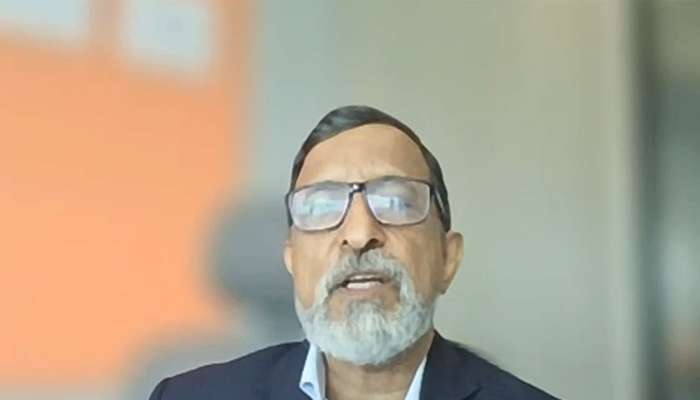
Mumbai: A likely rate hike by the US Federal Reserve coupled with elevated crude oil prices could intensify inflationary pressures and constrain the policy flexibility available to Indian authorities, according to Crisil Chief Economist Dharmakirti Joshi.
Speaking to ANI in an exclusive interview, Joshi said the external environment remains challenging for India, with global monetary policy and energy prices emerging as key risks for growth, inflation and the rupee.
Markets are currently pricing in a strong possibility of a 25 basis point rate hike by the US Federal Reserve at its September policy meeting, while Brent crude has climbed above $100 a barrel amid heightened geopolitical tensions and concerns over global energy supplies.
Joshi said the prospect of continued monetary tightening by global central banks could limit the room available to emerging-market economies such as India.
"We are expecting a 25 basis point rate hike by the US Fed in September, with up to an additional 50 basis points of rate increases expected by the end of 2026," Joshi said.
He added, "Global central banks remaining vigilant on interest rates keeps pressure on emerging markets, making it critical for domestic monetary authorities to remain proactive rather than reactive."
The combination of higher global interest rates and costlier crude could pose a difficult trade-off for India, particularly by putting pressure on the rupee and increasing imported inflation.
Crude oil, in particular, remains a significant risk to India's macroeconomic stability. Brent crude was trading around $107 per barrel on Tuesday, after rising amid attacks on Saudi energy infrastructure and concerns over supply disruptions.
Joshi said sustained high oil prices could eventually increase the burden on consumers, while also affecting growth and the country's external balances.
"If oil prices remain high, I think the consumer will also have to bear the brunt... you also need to give a signal that the demand should slow down, and that signal comes from higher prices," he said.
The impact of expensive crude extends beyond retail fuel prices, as higher energy and transportation costs can feed into the broader economy. India's dependence on imported crude also means a sustained oil shock can widen the import bill and put pressure on the current account and the rupee.
Against this backdrop, Joshi expects the Reserve Bank of India to have less room to remain in a prolonged wait-and-watch mode if inflationary pressures become more broad-based.
"I think we'd see RBI tilting more towards tightening, because the corridor for a 'wait-and-watch' mode is shrinking," he said.
"When growth is strong, input cost pressures get passed on to other items, leading to generalised inflation. So there will be hawkishness in the policy," Joshi added.
The comments come as expectations of an RBI rate hike have also increased amid the sharp rise in crude prices.
On inflation, Joshi attributed the recent rise in food inflation to base effects and weather-related supply disruptions. "There is a very weak base effect. Last year, food inflation was on average below 0%, so it's a weak base," he said.
"Weather-related risks are also materialising and getting reflected in some crops," Joshi added.
He, however, said core inflation remains relatively contained, limiting evidence of broad-based price pressures so far.
"Core inflation is not showing any sign of big stress," Joshi said.
Despite the heightened risks from crude oil and global monetary policy, Crisil has retained its FY27 inflation forecast at 5.1 per cent for now.
"We are data-driven. If there is a sense that crude prices are sustaining at these levels, that can force an upward revision of our inflation target, but so far, we are sticking to 5.1%."
Joshi said India's longer-term growth prospects would depend on strengthening domestic growth drivers, improving the business environment and enhancing energy security.
"If you want to raise it and want to become a Viksit Bharat by 2047, then I think you will have to push the reform pedal harder," he said.