Wednesday 16 / September / 2026
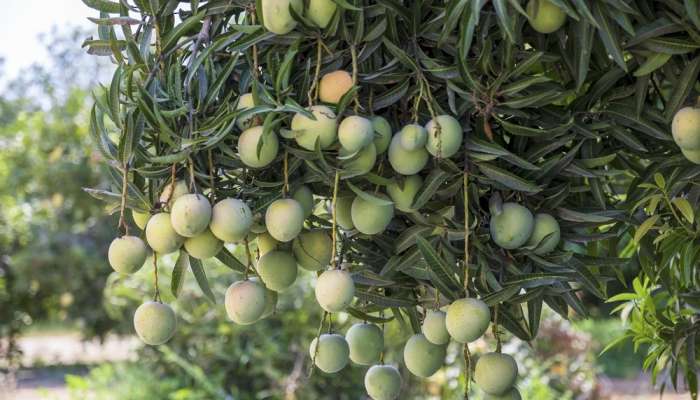
Muscat: The Sultanate of Oman is moving to strengthen investment in the mango crop and enhance its productive and competitive capacity. This forms part of a broader drive to increase domestic agricultural output and capitalize on the production gap by creating investment opportunities of economic value. The aim is to boost productivity, raise self-sufficiency rates, and grow the economic value of Omani agricultural products.
Statistical data point to promising investment opportunities. The Sultanate of Oman imports around 46,211 tonnes of mangoes, valued at approximately RO 18.7 million. This reflects the scale of domestic demand for the crop and opens the way to redirect part of that value towards domestic production and investment. It also supports the development of the mango value chain.
Dr. Hamdan bin Salim Al Wahaibi, Director General of Agricultural Development at the Ministry of Agriculture, Fisheries and Water Resources, stated that the volume of mango imports is an important economic indicator of a promising domestic market. The private sector and investors can capitalize on this market. He noted that the approach for the coming phase rests on a shift in perspective: mangoes should no longer be viewed merely as an agricultural crop, but rather as an integrated economic value chain. This chain extends from seedling production and cultivation through to packaging, marketing, and food processing, helping to substitute part of imports and enhance the product's local value.
In a statement to Oman News Agency (ONA), he explained that the Sultanate of Oman has a solid production base to build upon. The area currently cultivated with mangoes stands at about 3,907 feddans, while production exceeded 17,123 tonnes in 2025. He affirmed that raising production in the coming phase will not rely solely on horizontal expansion of agricultural areas. It will also depend on increasing productivity per unit area, improving fruit quality, enhancing water use efficiency, and selecting economically viable varieties, alongside expanding the use of modern irrigation and farm management technologies.
He indicated that the Agricultural Research Station in Sohar plays a pivotal role in providing the scientific foundation for expanding mango production. Its work includes variety studies, characterization assessment, and seedling production, as well as transferring research and trial results to farms and investment projects.
He noted that the mango genetic bank comprises 252 varieties and 708 trees, collected from various governorates of the Sultanate of Oman and from 23 countries. This provides an important genetic base for selecting the varieties best suited to local conditions and strongest in terms of productivity and marketability.
He added that research studies and trials have led to the selection of more than 30 promising varieties in terms of productivity and quality. This enhances prospects for well-considered expansion into varieties capable of better economic returns and responsive to market requirements in quality, quantity, and production seasons.
He affirmed that the mango production localization plan for the period 2026–2030 aims to achieve a qualitative leap in domestic production volume. This will be achieved by expanding the cultivated area to about 10,300 feddans and raising production to nearly 44,785 tonnes, with an estimated production value of around RO 17 million.
He noted that 2026 will see the launch of investment opportunities in mango production. This reflects a transition from identifying the import gap to utilizing it economically through productive and commercial projects capable of growth and sustainability. He affirmed that the economic opportunities linked to mangoes are not limited to tree cultivation and fruit production. They extend across an integrated value chain encompassing seedling production, agricultural inputs, modern irrigation systems, and agricultural services, as well as sorting and grading, packaging, refrigeration, storage, and transport, through to mango-based food and processing industries.
Dr. Hamdan affirmed that developing these activities would raise the local value realized from the crop. It would also open new opportunities for small and medium enterprises and entrepreneurs, and generate economic activities and jobs linked to agricultural production, logistics services, marketing, and manufacturing.
He believes that the success of this approach requires integrated roles among research, the private sector, farmers, and financing and marketing entities. Research outcomes and the selection of promising varieties must translate into sustainable commercial projects, and investment decisions must be built on clear indicators of production, demand, and markets.
He added that a market currently absorbing more than 46,000 tonnes of imported mangoes annually provides investors with a clear indicator of demand volume. It also reduces investment risks tied to market search, provided that the local product is able to compete in terms of price, quality, and continuity of supply.
The Director General of Agricultural Development affirmed that mangoes can serve as a practical model for transforming an import gap into an investment opportunity. This can be achieved by directing investment towards a product with existing domestic demand, drawing on available research capabilities and genetic resources, and building a value chain that generates economic returns beyond the farm.
He indicated that the coming phase requires linking agricultural investment more closely with market and demand indicators. The objective is not merely to increase cultivated areas, but to build a productive and competitive sector capable of achieving sustainable economic returns, enhancing food security, creating jobs, and raising agriculture's contribution to economic diversification.
These directions fall within the national pathway to enhance production of food commodities with import gaps and to capitalize on available opportunities to increase local value and maximize the economic impact of the agricultural sector.
As mango development plans move from research and trials to expansion and investment, a clear economic equation emerges: 46,211 tonnes of imports represent an existing market, and OMR18.7 million represents economic value, an increasing portion of which can be retained within the national economy. This will come through more efficient and competitive Omani production and an integrated value chain capable of transforming mangoes from a promising crop into a sustainable investment opportunity.