Thursday 17 / September / 2026
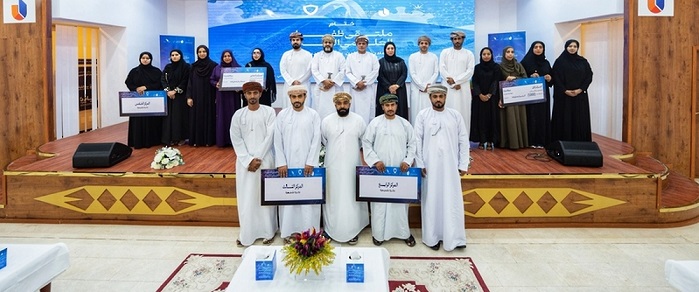
Salalah: The organising committee of the "3rd Dhofar Scientific Forum", organised by the Research and Innovation Authority in cooperation with the University of Technology and Applied Sciences (UTAS) in Salalah, announced the final results of the winning teams in the research studies track, following a scientific competition that brought together a number of researchers and academics from various higher education institutions and research centers in the Sultanate of Oman.
The closing ceremony included the presentation of a visual display on the forum's activities and the honoring of the first-prize winners, the judging panel, and the forum's organizing committee. The results culminated in the oil spill study challenge team winning first place, comprising researchers Khadija Salim Al Hosni, Noura Al Murr Al Ghabshi, and Bushra Mohammed Al Kalbani, under the supervision of Dr. Zakia Said Al Amri.
Meanwhile, the tourist pressure study challenge team during the Khareef season secured second place. The study was prepared by a team consisting of Muna Khamis Al Alawi, Reem Saleh Al Harassi, Badriya Khamis Al Fleiti, and Ohood Khamis Al Jabri, under the supervision of Dr. Noor Masoud Kashoob.
The outputs underwent rigorous evaluation by a judging panel comprising a number of experts and specialists according to criteria that included scientific research methodology, quality of visual presentations, and effectiveness of executive recommendations.
Dr. Nasreen Yahya Al Balushi, in charge of managing the Department of Building Research and Innovation Capabilities at the Research and Innovation Authority, emphasised that the success of the 3rd Dhofar Scientific Forum represents an important milestone in utilizing scientific research and innovation to serve society and address priority developmental challenges in Dhofar Governorate.
She explained that the strategic research studies track at the forum, which came in partnership with the Chair of Strategic Technical Studies, focused on diagnosing a number of vital challenges. These included economic challenges, supporting small and medium enterprises, addressing oil spills, managing tourist pressure during the Khareef season, water resource management, and sustainable agriculture, as well as preserving intangible cultural heritage.
She pointed out that the true value of this track is not limited to crowning the winning teams, but lies in the knowledge, practical solutions, and applicable recommendations produced by the research teams, paving the way for translating them into initiatives and projects with economic and developmental value that support the path of sustainable development in the governorate and align with the targets of Oman Vision 2040.