Saturday 31 / October / 2026
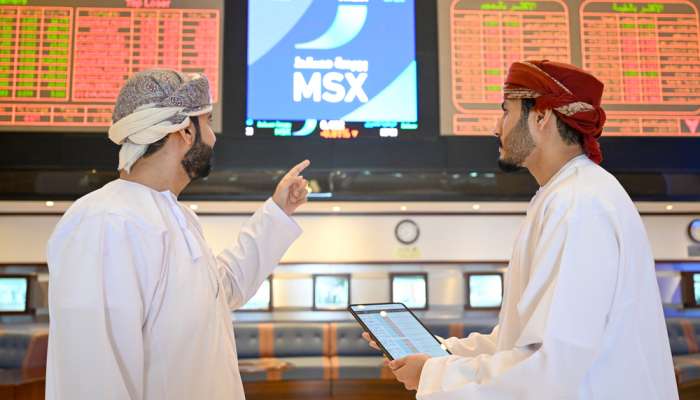
Muscat: Trading value on the Muscat Stock Exchange (MSX) rose in October to OMR1.2913 billion, compared to OMR914 million in September and OMR976 million in August, recording the best level of monthly trading since last April.
This rise was supported by market-making funds, the Liquidity Development Fund, and the buying interest of local investment institutions. At the same time, the financial results for the third quarter of this year indicated an improvement in the financial results of public shareholding companies listed on the stock exchange and an increase in their net profits.
The Muscat Stock Exchange also benefited from the positive atmosphere that the stock exchange witnessed before the announcement by FTSE Russell of the official inclusion of the Muscat Stock Exchange on the watch list in preparation for the possibility of its future upgrade from frontier market classification to secondary emerging market.
The Muscat Stock Exchange recorded its highest monthly transaction volume this year in October, exceeding 294,000 transactions, compared to 199,000 in September and 178,000 in August. The number of traded securities rose to about 4.2 billion securities, compared to 3.3 billion securities in September and 3.4 billion securities in August.
In October, the Muscat Stock Exchange experienced a correction wave that affected the shares of most leading companies and pushed the main index of the exchange and sectoral indices down. It also pushed the total market capitalisation down to OMR38.58 billion, recording losses of OMR640.3 million compared to its level in September.
The main index ended October trading at 7,346 points, down 220 points after a 37-point decline in September. The financial sector index recorded a decline of 235 points and closed at 13,371 points. The industrial sector index declined 99 points and closed at 9,713 points. The services sector index fell to 2,950 points, down 58 points. The Sharia index declined 9 points and closed at 609 points.
Bank Sohar International topped the list of most traded companies in terms of trading value, after witnessing trades worth OMR229.5 million, representing 17.7 percent of the total trading value. Omantel came saw trading worth OMR202.1 million, OQ Basic Industries reported trades amounting to OMR180.6 million, OQ Exploration and Production (OQEP) saw trading worth OMR170.4 million, and Bank Muscat witnessed trades amounting to OMR163.6 million, representing 12.6 percent of the total trading value.
The month of October also saw the prices of 60 securities decline, compared to 38 securities whose prices rose and 14 securities that remained unchanged at their previous levels. National Gas shares led the gainers, rising by 35.5 percent and closing at 160 baisa. Sohar Power shares rose from 190 baisa to 256 baisa, recording an increase of 34.7 percent. Gulf Mushroom Products shares rose by 12.8 percent and closed at 555 baisa. Muscat Insurance shares rose to 560 baisa, increasing by 12.2 percent. Oman Cement shares recorded an increase of 9.7 percent and closed at 675 baisa.
Al Anqa Energy shares recorded the highest losses, declining by 28.6 percent and closing at 202 baisa. Oman Arab Bank shares fell by 25 percent and closed at 255 baisa. National Aluminum Products shares declined by 20 percent and closed at 80 baisa. Al Hassan Engineering (under liquidation) shares declined by 16.6 percent and closed at 5 baisa. Oman and Emirates Investment Holding Company shares recorded a decline of 14.1 percent and closed at 103 baisa.
The bond and sukuk market witnessed trading worth OMR24.4 million in October, compared to OMR779,000 in September. Issue 83 of the Government Development Bonds (GDBs) topped the list of the most traded securities in terms of trading value, after witnessing trading worth OMR12 million. Issue 6 of the Sovereign Sukuk came in second place with trading worth OMR5 million, and Issue 80 of the Government Development Bonds came in third place with trading worth OMR2.4 million.
Omani Free Finance Bonds 2024 recorded the highest gains, rising by 5.8 percent and closing at 90 baisa, while Dhofar International Development and Investment Bonds recorded the highest losses, declining by 1.4 percent and closing at 68 baisa.