Monday 16 / November / 2026
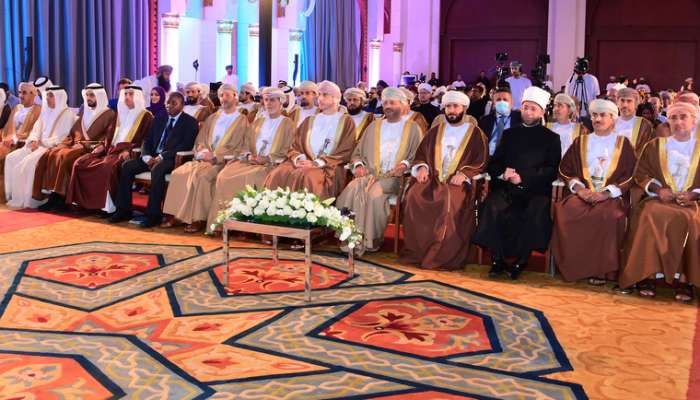
Muscat: Muscat Plan Global Forum, hosted by the Sultanate of Oman under the theme "From International Commitment to Local Impact: Prevention and Peacebuilding" explored ways to enhance the role of religious and traditional leaders, as well as indigenous peoples, in promoting dialogue, mediation and trust-building in preventing conflicts, countering hate speech and averting genocide, atrocity crimes and incitement of the same.
The forum’s opening ceremony was held under the patronage of Sayyid Badr bin Hamad Al Busaidi, Foreign Minister, and attended by a number of dignitaries—including members of the Royal Family, ministers, religious leaders, representatives from the United Nations and regional and international organizations, as well as traditional leaders and representatives of indigenous peoples.
The forum was organized through partnership between the Sultanate of Oman (represented by the Ministry of Endowments and Religious Affairs and the Foreign Ministry), the United Nations Office on Genocide Prevention, and a group of religious and traditional peacemakers.
Dr. Mohammed bin Said Al Maamari, Minister of Endowments and Religious Affairs, said in a speech that the Sultanate of Oman's vision is inspired by a deep-rooted approach to human and international relations—based on respect for sovereignty, non-interference in the internal affairs of other states, good neighbourliness and a commitment to prioritizing dialogue, mediation and peaceful solutions.
These principles, he explained, have become deeply embedded in Omani practice, reflecting a profound conviction that building relationships is more sustainable than managing rivalries. He pointed out that open channels of communication provide broader opportunities for mutual understanding and trust.
Al Maamari affirmed that this approach continues to take shape under the wise leadership of His Majesty Sultan Haitham bin Tarik, and that the approach stems from a conviction that "peace is a strategic choice, moderation constitute elements of moral and political strength and wisdom in managing differences forms a strong cornerstone of stability and peace".
He explained that the Omani experience underscores the interconnectedness of the world—in terms of a shared destiny and common challenges—despite the diversity of the world's geographies, cultures and interests. He added that the security of nations and the prosperity of societies are inextricably linked to the security and stability of others.
He noted that “Partnership is an expression of a sophisticated civilizational awareness regarding the shared destiny of humanity. It reflects the understanding that differences can be transformed into a source of strength when governed by justice and trust, and guided by a collective will toward development and peace.”
Al Maamari pointed out that the world is currently experiencing a profound paradox. He noted that, “While communication and connectivity tools have reached unprecedented levels, psychological and cultural distances between certain societies persist to expand. Meanwhile, polarization and hate speech are on the rise, and there is a declining confidence in humanity’s capacity to live securely alongside those who are different.”
He explained that the core issue does not lie in human diversity itself, but rather in how this diversity is understood and managed—with fairness, wisdom, and responsibility. He noted that the nature of human relations is shaped by the values that govern them, the institutions established by societies, and the opportunities available for exchange, mutual recognition, and equitable participation.
The minister said tolerance, in its deepest sense, transcends the mere endurance of differences or the passive acceptance of the "other." Instead, it represents an ethical consciousness that affirms human dignity, a civilizational maturity that recognizes the value of diversity, and a societal capacity to transform differences into relationships that foster understanding, integration, and partnership.
For his part, Dr. Osama Al Sayed Al Azhari, Minister of Endowments of the Arab Republic of Egypt, commended the Sultanate of Oman for hosting this event. He highlighted the significance of "Muscat Plan" as a gesture that unites partners, institutions and nations around a shared vision rooted in wisdom and cooperation. The plan, he added, seeks to combat hatred, mitigate conflicts, control wars and establish the conditions necessary to forge effective pathways toward peace and stability.
The minister observed that "Muscat Vision" seeks to turn diversity into a pathway for mutual acquaintance, which in turn forms the basis for and that confidence serves as the pillar for partnership.
He explained that the selection of the Sultanate of Oman to launch this initiative reflects global recognition of Oman’s legacy of wisdom, prudence and moderation inspired by Quranic values to foster mutual understanding and communication among peoples of different cultural backgrounds.
Participants in the forum elaborated on combating hate speech, the promotion of diversity and tolerance and the role of traditional, indigenous and modern media in implementing the action plan, which was developed through international consultations featuring insights presented by 87 leaders and representatives from 45 countries, ahead of the plan’s official launch at the United Nations headquarters in New York on 11 June 2026.




