Saturday 28 / November / 2026
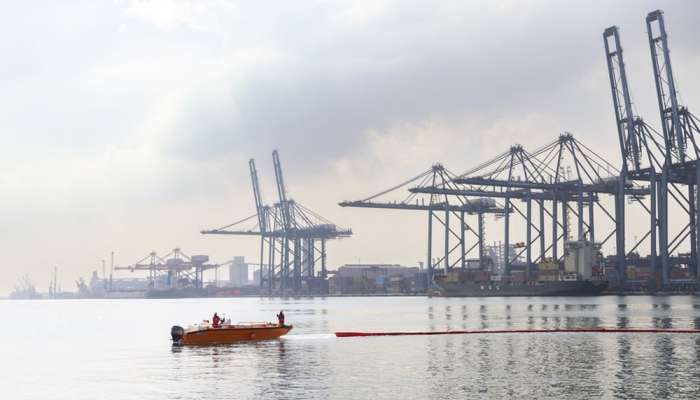
Muscat: Sohar Port and Freezone continues to strengthen its role in diversifying the national economy and cementing its position as an industrial and logistics hub connecting the Sultanate of Oman to regional and global markets.
In 2026, the port and freezone attracted new investments worth OMR 286 million, alongside notable growth in trade movement, cargo handling, and expansion in value-added industries.
Dr. Raed bin Mohammed Al-Rubaie, CEO of Sohar Port and Freezone, said the port and freezone are making significant progress that goes beyond infrastructure, contributing to attracting investment opportunities that are shaping the future of Sohar Port and Freezone. He added that they are developing an integrated environment linking industry, innovation and community, with a focus on achieving the goals of Oman Vision 2040 and building a diversified economy that keeps pace with change and competes in global markets.
He added that during the first ten months of the year, Sohar Port recorded a 40.6% growth in container handling volume, reaching 967,300 TEUs, while container transshipment activity rose by 213%. General cargo handling also increased by 92.9%, reaching 2.4 million metric tonnes. Vessel traffic grew by 12.3%, with ship calls reaching 3,194, while ship-to-ship cargo transfer amounted to 8,464 million metric tonnes, reflecting the port's growing role in regional maritime trade.
On the investment front, he pointed out that 2026 saw the signing of 10 agreements for new projects in the industrial and logistics sectors, with a total value of about OMR 286 million. In addition, 1.2 million square metres of land were allocated for investment projects in the port and freezone.
Al-Rubaie affirmed that this performance is based on an integrated system combining advanced infrastructure, industrial and logistics capabilities, and digital facilities and services. These elements contribute to raising supply chain efficiency and providing a competitive business environment that enables investors to develop their projects and expand their activities, supporting sustainable growth in business and investment.
In terms of expanding sustainable industries, he noted that Sohar Freezone hosts two major projects in the solar energy sector. The first is the USB project, with an investment of OMR 668 million, for the production of high-purity polysilicon used in manufacturing solar cells. The second is the Orion Solar project, with an investment of OMR 177.5 million, to boost solar cell production, noting that the two projects together are expected to provide more than 3,000 job opportunities during their implementation plans.
He said the development of these projects comes in parallel with efforts to complete the second phase of the freezone expansion, supporting the development of industrial infrastructure and raising production capacity. The two projects also contribute to building integrated value chains in the clean energy sector and enhancing the presence of Omani industries within global supply chains for this sector.
He pointed out that Sohar Port and Freezone won a number of international awards and rankings during 2026. The port won the "Port of the Year" award at "The Maritime Standard" Awards, while Sohar Freezone was named the Best Industrial Zone in the Middle East according to "fDi" magazine. The freezone also ranked fourth globally, sixth globally in AI readiness, and tenth globally in aftercare services.
Sustainability is a key pillar in managing operations and industrial activities at Sohar Port and Freezone. Efforts in this area include reducing carbon emissions, improving energy and resource efficiency, and applying circular economy practices. These efforts extend to developing low-carbon industries and enhancing resilience to the impacts of climate change.
Investment in people and the development of the local community are also among the priorities of Sohar Port and Freezone, with more than 40,000 individuals benefiting from corporate social responsibility programmes and initiatives during the first nine months of 2026. These initiatives covered education, youth capacity building, health, community development, and environmental sustainability.
These achievements form a foundation for continuing to create long-term economic and development opportunities, and maximizing the economic and social returns of projects and investments, in line with the goals of Oman Vision 2040 and enhancing the competitiveness of the national economy.