Wednesday 18 / February / 2026
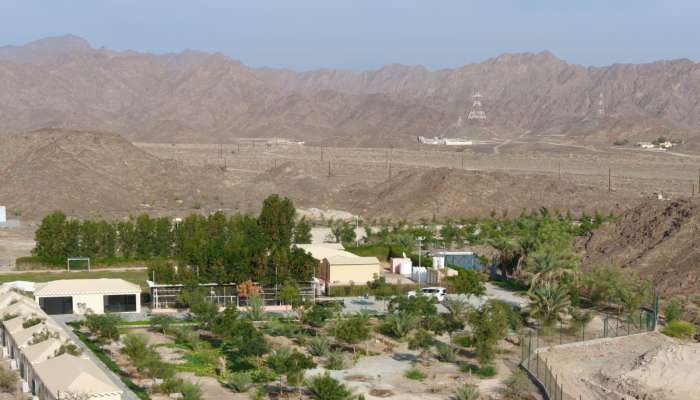
Nizwa: The Neem Camp project in the Wilayat of Nizwa, Al Dakhiliyah Governorate, represents an innovative model for experiential tourism, merging wilderness adventure with authentic interactive experiences. This approach transforms visitors into active participants in the journey's narrative. The project's investment value exceeds OMR250,000.
The experience at Neem Camp begins with learning about animal care techniques, including interactions with livestock. It then progresses through the stages of wool shearing and hand-spinning, culminating in the creation of traditional textile crafts. At the conclusion of the experience, visitors receive a finished product as a living souvenir that reflects Oman's authentic heritage.
Neem Camp secured first place in the governorates track during the Together Forward forum, as part of the Hamat Ideas Incubator programme by Oman Investment Authority. This national programme is based on challenges derived from actual needs across various sectors, transforming real-world obstacles into opportunities for innovation and applicable technological solutions.
Ishaq Hilal Al Shariani, Head of Neem Camp project team, stated that the project offers activities inspired by the Omani environment. These include extracting natural oils from local plants, undertaking mountain adventures to explore diverse nature and terrain, and interactively preparing traditional Omani meals. All of this occurs within an immersive environment that combines enjoyment with education, reinforcing the concept of experiential tourism based on exploring the rich environmental and cultural components of the Sultanate of Oman.
He added that the Neem Camp project is committed to embedding principles of environmental, economic, and social sustainability. This is achieved through the responsible utilisation of local resources, minimising the environmental impact of its activities, and maximising the benefit derived from natural products available in the Wilayat of Nizwa. The project contributes to creating quality, sustainable job opportunities for the local community and empowering household producers and artisans, thereby strengthening the economic cycle within the village.
Al Shariani clarified to Oman News Agency that the Neem Camp experience is not merely a transient tourism project but an embodiment of "anthropological tourism," which connects the visitor to the land and identity. The project's vision integrates "entertainment" with "living expertise," capitalising on the rich environmental diversity of the Wilayat of Nizwa.
He explained that Neem Camp breaks the stereotypical image of traditional tourism projects, as it does not merely sell "accommodation" but offers an educational destination and an economic and social experience simultaneously. While many projects focus on lodging and entertainment, Neem Camp adds an element that creates higher value: "productive experience" or "experiential tourism."
Ishaq Al Shariani further emphasised that the future of this type of tourism is highly promising in the Sultanate of Oman, given its environmental diversity, deep-rooted heritage, and local community rich in skills. Experiential tourism is not tied to one specific wilayat and can be adapted according to the identity of each region: the coast, the mountain, the desert, the oases, or the agricultural villages.
He noted that the idea of developing a "mini-workshop" within Neem Camp is a direction they believe in, as it achieves two goals simultaneously: an educational tourism service—offering visitors short, professional workshops (producing oil-based, aromatic, or wool products, and simple crafts)—and productive value, by transforming part of the output into products bearing the locality's identity, sold to visitors or through other channels.