Tuesday 18 / August / 2026
Muscat: In terms of transaction activity, Oman’s real estate market performed better during the first half of 2026 than it did during the same period last year, as well as during most of the past decade, according to an analyst.
“This is a very positive indication of the market’s direction,” said Ihsan Kharouf, Head of Oman at Savills Middle East adding that, “One of the standout trends is the number of Integrated Tourism Complex (ITC) developments currently available or being brought to market across the country, which is certainly at an all-time high.”
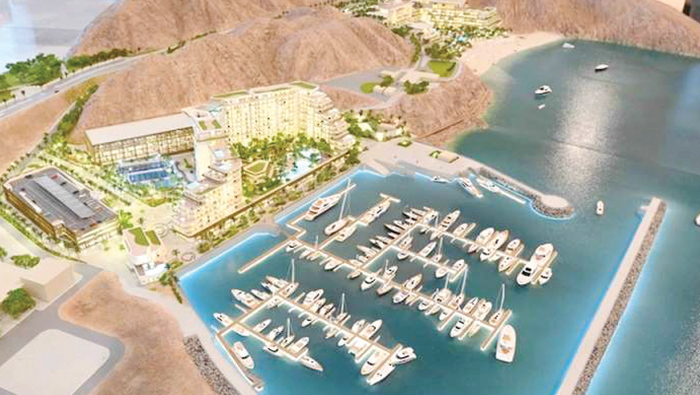
Elaborating about the main projects currently under development in Oman, Ihsan Kharouf said, “Within the ITC sector, key developments include the remaining phases of Al Mouj, The Sustainable City – Yiti, AIDA, Jebel Sifah, Sultan Haitham City, Muscat Hills and Hawana Salalah. Several other developments are also expected to be launched during 2026 and 2027.
Transaction volumes at the halfway point of 2026 were comparable with those recorded in 2018, although they remained below the levels reached in 2016. Nevertheless, the market continues to demonstrate positive momentum.
Regarding the key trends across property sales, rentals and the office market, Ihsan Kharouf said, “We are seeing a growing number of projects being introduced to the market, with further launches potentially planned for the second half of 2026.”
Developers are offering longer payment plans and additional incentives to attract buyers, while targeting a broad range of international markets to promote Oman and its real estate sector, he added.
“We are also seeing more development within established communities. These projects benefit from existing infrastructure and buyers’ familiarity with their locations. This differs from some newer, larger-scale ITCs, where infrastructure and supporting amenities, such as retail, education and healthcare, are still being developed,” Ihsan Kharouf pointed out.
“Within the office market, there has been an increase in flexible spaces that can be combined, subdivided or used for co-working. This reflects the significant changes taking place in corporate working cultures and occupiers’ evolving requirements,’ he added.
Outside the ITC sector, several interesting projects are being developed across the city by companies including Tathmeer, Omnia and Wujha, which are active across both ITC and non-ITC developments.
Real estate transactions
Approximately 34,000 transactions were recorded during the first half of 2026, with a combined value of OMR 1.43 billion.
“Both figures increased compared with the same period in 2025. The total transaction value rose by approximately 5%, while the number of transactions increased by almost 7%,” Ihsan Kharouf further said.
He pointed out that a detailed geographical breakdown of transaction volumes is not currently available, making it difficult to assess which individual areas recorded the strongest sales activity.
Elaborating about the office market he said that “Muscat’s office market remained broadly stable during H1 2026, with rental rates largely unchanged across key business districts and typically ranging between OMR 4 and OMR 6 per sq m per month for most units.”
Al Khuwair and Shatti Al Qurum maintained stable rental rates of OMR4.5 and OMR6 per square metre per month, respectively, indicating balanced occupier demand.
Ghubrah and Azaiba were the strongest-performing office submarkets, with rental rates increasing by 4% quarter-on-quarter to OMR5.75 and OMR6.25 per square metre per month, respectively. This reflects continued demand for space within established office locations.
Speaking about the main challenges currently facing the sector, Ihsan Kharouf said that regional instability has had a dual effect on the market. On the one hand, it has highlighted Oman’s comparatively different risk profile relative to some other regional locations. On the other, it has had a short-term impact on certain investment decisions. However, we expect this effect to be temporary.
“Questions have also been raised about the alignment between future supply and demand, although it remains too early to determine how this may affect the market. We expect to see measured policies around new project launches to help ensure that future supply remains aligned with the level of demand the market can absorb.”